8 Questions to Ask a Web Designer, and the Honest Answers
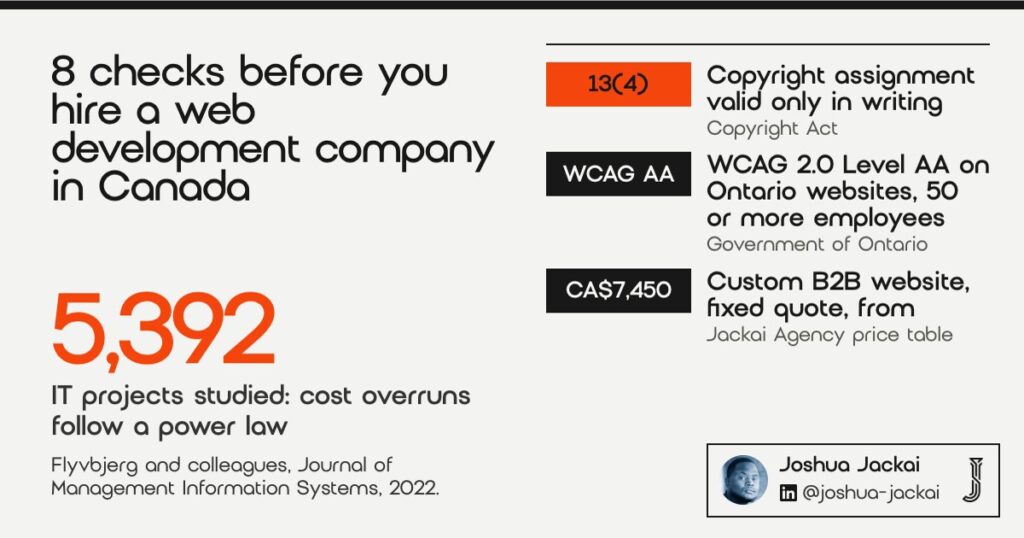
Eight questions a Vancouver business should ask before hiring a web designer, what a good answer sounds like and the answer that should send you to the next proposal, with a proposal comparison matrix, a true-cost calculator and CAD prices from my fixed-quote table.
 Joshua Jackai
21 min read
Published 31 October 2023 · Last updated and fact-checked November 2026
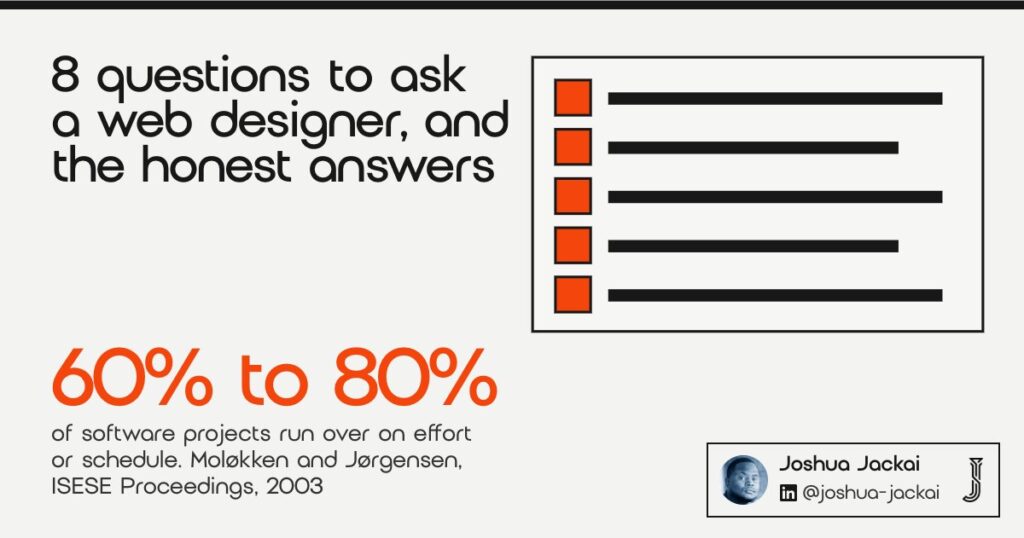
Short answer: Ask who does the work and whether the price is a fixed quote. Then ask what one revision round means, who owns the domain and hosting, what research comes first, what they need from you, how results get measured and what support costs after launch. Price matters most: 60% to 80% of software projects overrun (Moløkken and Jørgensen, 2003).
A managing partner in Burnaby has three web design proposals open in three browser tabs. All three promise a responsive site, good SEO and an on-time launch. She can’t tell them apart, so she’s leaning toward the cheapest. The right questions to ask a web designer would split them in ten minutes.
I’m Joshua Jackai. I run Jackai Agency, a web design practice in Vancouver, and I’m usually the one answering these questions for B2B firms, professional-service practices and local retailers. Each question here comes with what a good answer sounds like and the answer that should send you to the next proposal. It works the same for a freelancer or a web design agency.
In this guide
Key takeaways
- In a review of software estimation surveys, 60% to 80% of projects ran over on effort or schedule (Moløkken and Jørgensen, 2003), so ask for a fixed quote.
- Requirement uncertainty helped explain whether 93 offshore software projects were priced fixed or by the hour (Gopal and colleagues, 2003).
- A vendor lock-in paper built on a 114-person survey argues most customers can’t see what will stop them moving later (Opara-Martins and colleagues, 2016): put the domain, hosting and admin login in your name.
- People judged a homepage’s visual appeal within 50 milliseconds (Lindgaard and colleagues, 2006), which is why a portfolio proves taste but not terms.
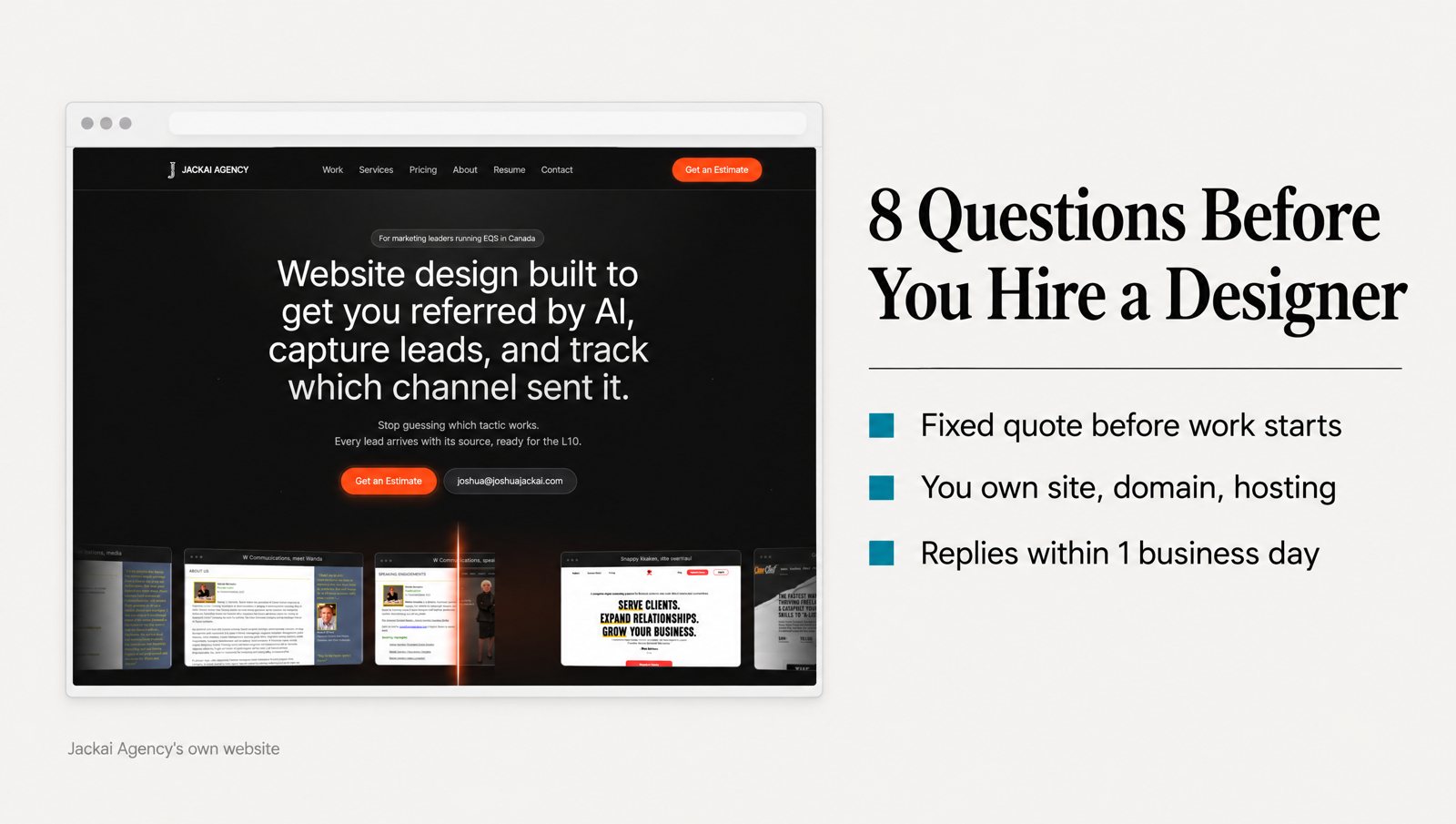
- Every Jackai Agency project runs on a fixed quote with 2 revision rounds per phase; a 5-page Small Business Website is CA$4,950 on Framer (price table, November 2026).
| # | Question | When to ask | A good answer names | Evidence |
|---|---|---|---|---|
| 1 | Who will actually do the work? | First call | People and roles | Proof bank: solo practice |
| 2 | Is the price a fixed quote, and what does it leave out? | Proposal | One number plus written exclusions | Moløkken and Jørgensen, 2003; Gopal and colleagues, 2003 |
| 3 | What counts as one revision round? | Proposal | A number per phase | Moløkken and Jørgensen, 2003 |
| 4 | Who owns the site, the domain and the hosting? | Contract | Accounts in your name | Opara-Martins and colleagues, 2016 |
| 5 | What research happens before design? | First call | Named audiences and tasks | Pirolli and Card, 1999 |
| 6 | What will you need from me, and by when? | Kickoff | A dated list with owners | Buehler and colleagues, 1994 |
| 7 | How will we know the site is working? | Kickoff | A starting number and where it lives | Y Scouts and S.T. Dupont cases |
| 8 | What happens after launch? | Contract | Reply time, rate and exit plan | Price table, care plan |
Why ask questions instead of judging the portfolio?
A portfolio shows finished pages from their best angle. It doesn’t show who built them, what they cost or whether the client could edit them a year later. Looks win fast: people rated homepage visual appeal within 50 milliseconds in 3 studies (Lindgaard and colleagues, 2006). Your questions test terms, not taste.
“Visual appeal can be assessed within 50 ms, suggesting that web designers have about 50 ms to make a good first impression,” wrote Gitte Lindgaard and colleagues (Behaviour and Information Technology, 2006).
Design shapes trust, too. When 2,684 people judged the credibility of live websites in a Stanford University study, the design look came up more than any other feature (Fogg and colleagues, 2003).
“Was mentioned most frequently, being present in 46.1% of the comments,” wrote B. J. Fogg and colleagues about the design look (DUX Conference Proceedings, 2003).
So a polished portfolio proves a designer can win that first glance for you. It proves nothing about price, ownership or support. That’s the gap the 8 questions fill, in the order a project runs, from the first call to month four after launch.
1. Who will actually do the work?
The person who pitches you isn’t always the person who designs your pages. Ask who designs, who builds, who writes the copy and who answers your emails. A good answer gives names and roles. At Jackai Agency, 1 person does all four jobs, and you should know what that costs as well as what it saves.
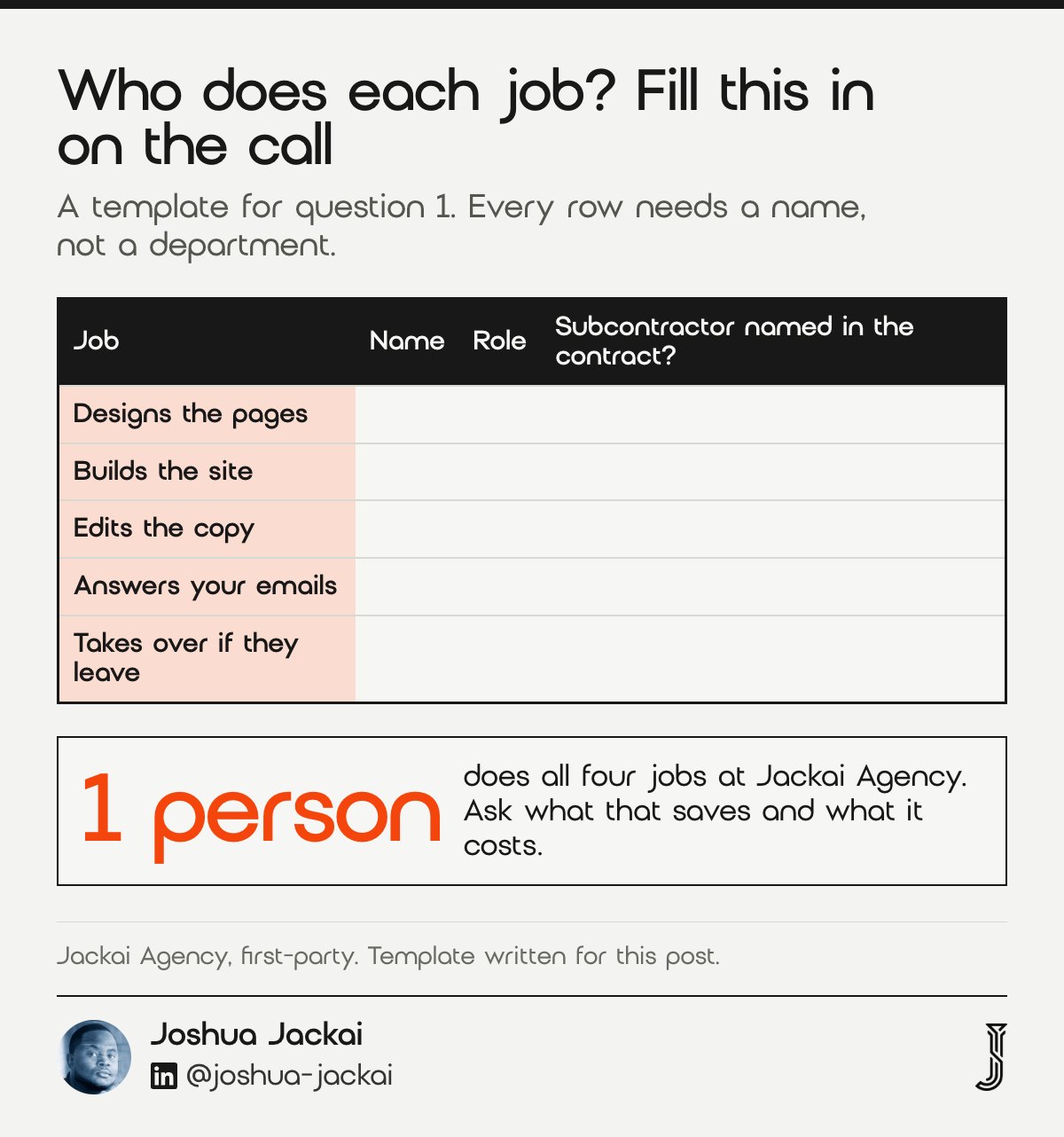
- Ask: who designs, who builds, who edits the copy, who replies
- Good answer: names and roles, plus any subcontractor in the contract
- Walk away if: “Our team handles everything” and nothing more
- Follow-up: who takes over if your designer leaves mid-project
At a larger web design agency, a salesperson or account manager may run the calls, a designer you never meet makes the layouts, and a developer, sometimes a subcontractor, builds them. That model can work. You should know it before you sign, because the person you trusted on the call may never touch your site.
My answer is short. I run the research, design the pages, build them (mostly in WordPress, also in HubSpot CMS, Shopify and Framer) and answer the emails. There’s no account manager between the person who built your site and the person reading your numbers.
That has a cost, and you should hear it. One person can’t run five launches in the same week, and an agency with ten staff can absorb a sick week better than I can. If your launch date can’t move by a day, ask a solo designer what happens if they’re out.
Ask where the work happens, too. I work from Vancouver and remotely for clients in Seattle, the UK, Arizona and Florida. Subcontracting isn’t a problem on its own. It should just be named in the contract. For the wider choice between a freelancer and a firm, my guide to choosing a web design agency in Vancouver covers it.
2. Is the price a fixed quote, and what does it leave out?
A fixed quote is one price for a written scope, so the risk of a bad estimate sits with the designer, not you. It suits any business with a set budget. It matters because 60% to 80% of software projects run over on effort or schedule (Moløkken and Jørgensen, 2003), and a website is a software project.
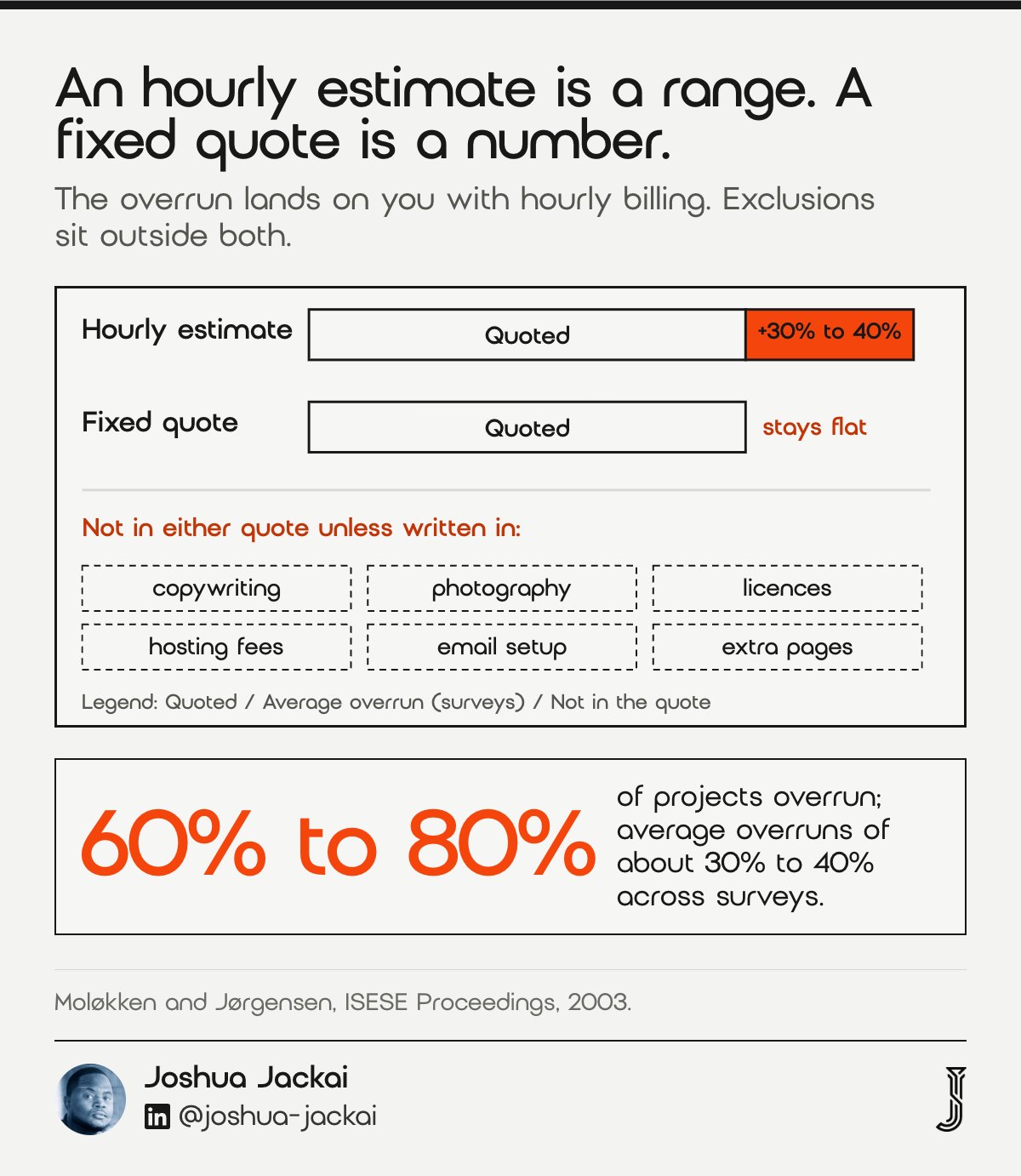
- Ask: is this one number, and what does it not include?
- Good answer: a fixed price, pages and platform named, exclusions in writing
- Common exclusions: copywriting, photography, stock and plugin licences, hosting fees, email setup, extra pages
- Walk away if: an hourly estimate with no cap
- Vancouver check: which currency, and is tax included?
Hourly billing puts the risk on you. The same review put average overruns at about 30% to 40% across surveys.
“Most projects (60-80%) encounter effort and/or schedule overruns,” wrote K. Moløkken and M. Jørgensen (ISESE Proceedings, 2003).
How a designer prices the job also tells you how clear the scope is. In a study of 93 offshore software projects, requirement uncertainty helped explain whether a project was priced fixed or billed by the hour (Gopal and colleagues, 2003). If a designer won’t commit to a fixed quote, ask what they think is still unclear, and settle it before you sign.
“Requirement uncertainty, project team size, and resource shortage significantly explain contract choice in these projects,” wrote Anandasivam Gopal of the University of Maryland and colleagues (Management Science, 2003).
Then ask for the exclusions in writing. None is a trick when it’s listed. Each turns into an argument in week five. I don’t shoot photography, so if your site needs new team photos, I say so on the first call. Ask about currency as well: a US agency quoting in US dollars can look cheaper until you convert it. My post on why web design quotes vary so much breaks down the gaps.
3. What counts as one revision round?
A revision round is one combined list of changes, sent once, by the person who signs off. It’s the clause that keeps a fixed quote fixed. Every Jackai Agency quote includes 2 revision rounds per phase. Ask any designer to define a round and a phase before you sign, because the overrun risk lives here.
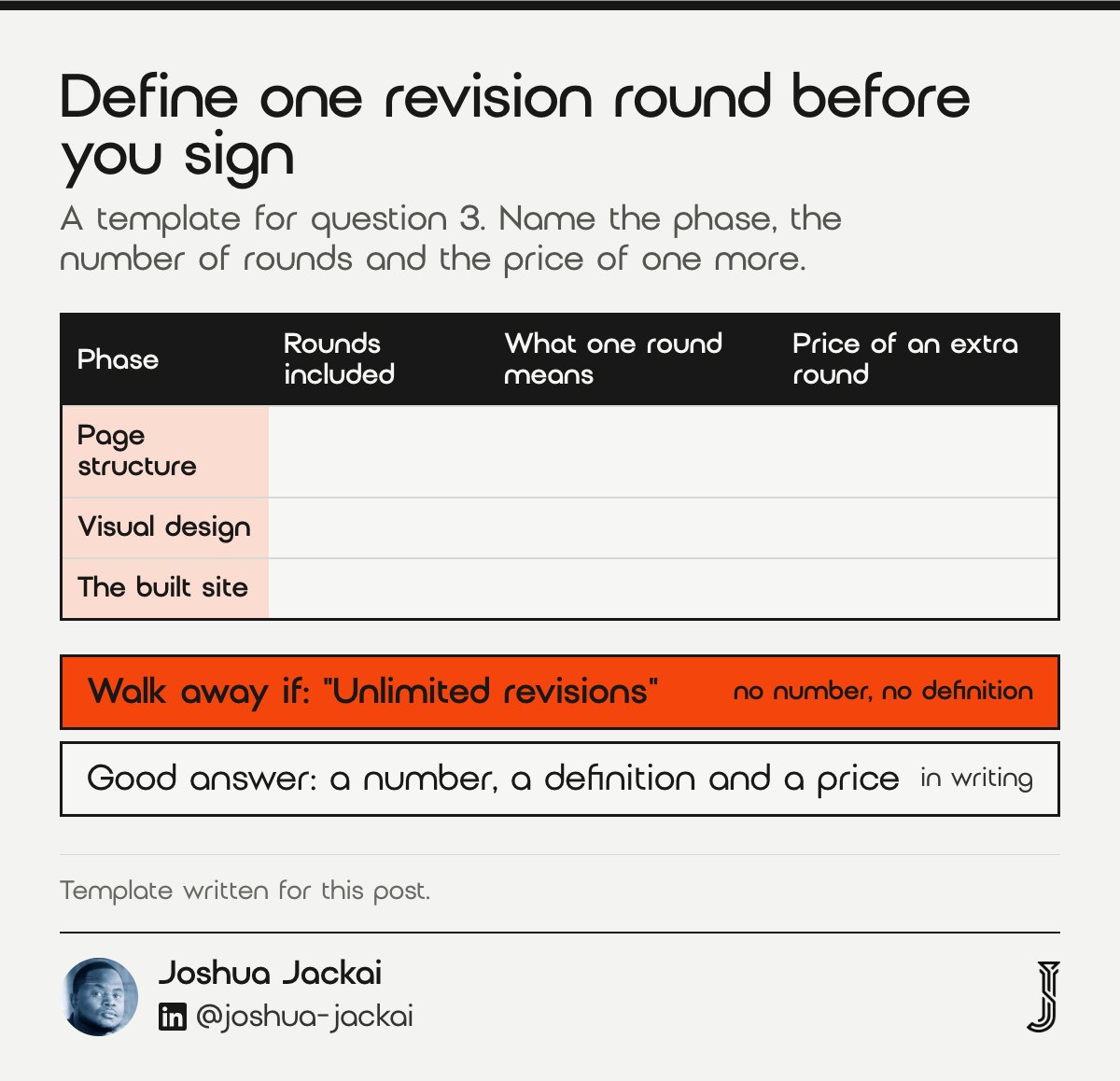
- Ask: how many rounds per phase, and what one round means
- Good answer: a number, a definition and the price of an extra round
- Phases to name: page structure, visual design, the built site
- Walk away if: “Unlimited revisions”
Five people emailing separate notes over a week isn’t one round, and a good designer says so on the first call, not on the invoice.
“Unlimited revisions” sounds generous. In my experience it means the scope has no edge, and a project with no edge ends when someone runs out of patience, not when the site is done. A set number of rounds gives the project an edge both sides can see.
Ask the designer to split the work into stages that each get a sign-off. Mine run page structure first, then visual design, then the built site. Changing a page’s structure after the build costs far more than changing it on a wireframe, so the sign-off order matters as much as the count.
Then ask what a third round costs before you need one. That price tells you how the designer thinks about scope. A clear number means they’ve had the conversation before. A shrug means you’ll have it later, with less room to say no. The surveys Moløkken and Jørgensen reviewed found average overruns of about 30% to 40% (2003), and they note how little those surveys say about why. On my projects, the usual cause is small, unpriced changes, which is exactly what an undefined round invites.
4. Who owns the site, the domain and the hosting?
Site ownership means the domain, hosting, admin login, licences and files sit in your company’s name, so a designer is a user you can remove. It suits every buyer. Lock-in hides well: a paper built on a 114-person survey argues most customers are unaware of what stops them moving (Opara-Martins and colleagues, 2016).
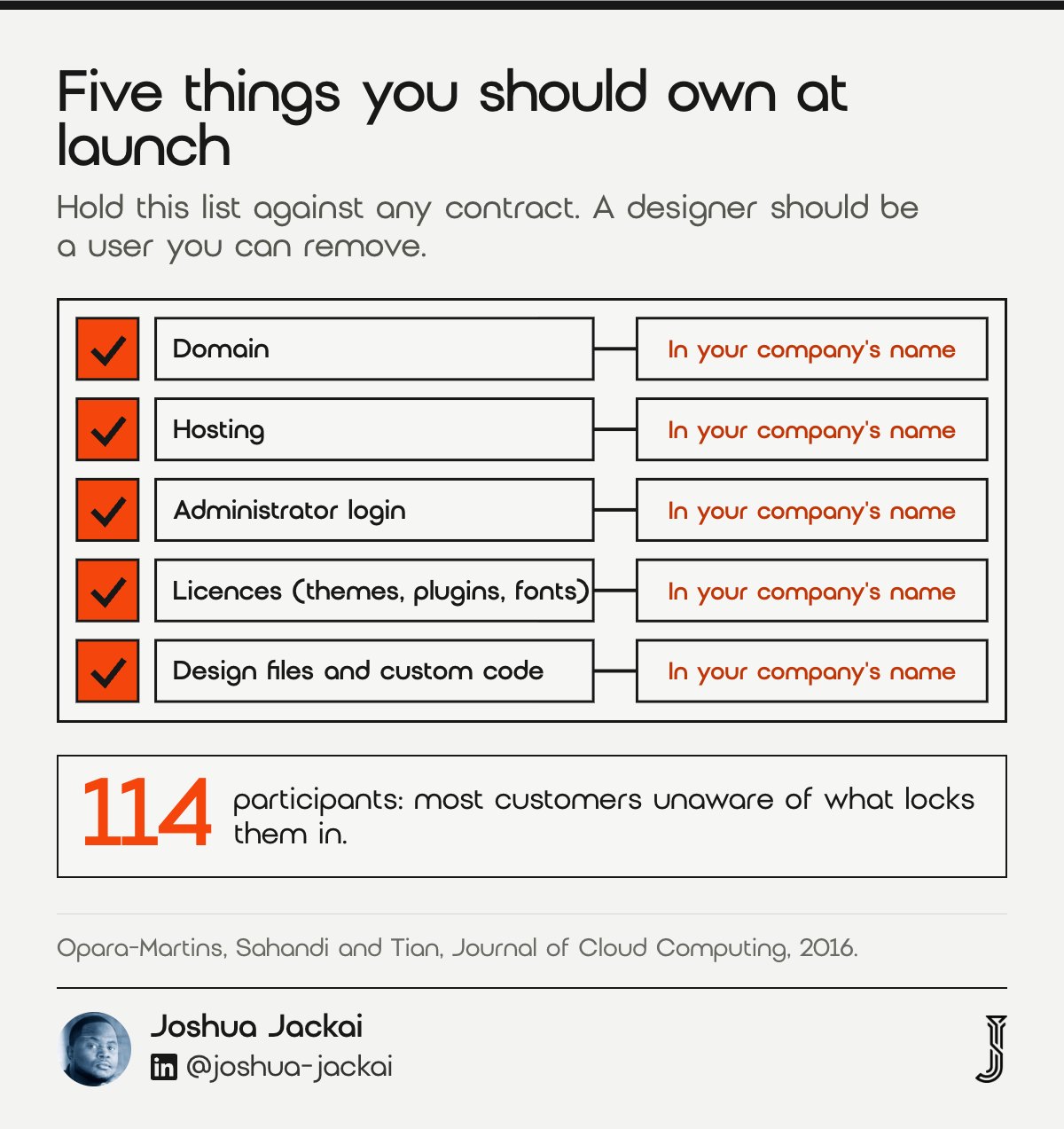
- Domain: registered in your company’s account, with your email on it
- Hosting: an account in your name that you pay
- Admin access: a full administrator login of your own from day one
- Licences: paid themes, plugins and fonts licensed to you, or a note of what lapses
- Files: design files and custom code handed over at launch
Here’s the version that goes wrong. The designer registers your domain in their own name, hosts the site on their own account and holds the only admin login. Everything works until the relationship ends. Then you’re negotiating for your own web address.
“Most customers are unaware of proprietary standards which inhibit interoperability and portability of applications when taking services from vendors,” wrote Justice Opara-Martins and colleagues (Journal of Cloud Computing, 2016).
That paper studied cloud services, not small business websites, so read it as a direction. Its advice holds for both: settle portability in the contract and pick vendors who use standard formats.
My standard terms say the client owns the site, the domain and the hosting. Ask for that sentence, word for word, in any proposal, mine included. A fixed quote that leaves ownership out is missing its most expensive line.
Ownership also means you can change your own pages without paying someone each time. At Snappy Kraken, a B2B FinTech SaaS company that sells marketing systems to financial advisors, I took the design from Figma to production on HubSpot CMS in 3 weeks (Snappy Kraken case study). The in-house marketing team now edits inside that design system on its own. Ask any designer to show you, on a live site, how a non-developer adds a page. For the Canadian legal side, my guide to who owns your website in Canada goes deeper.
5. What research happens before anything gets designed?
Research before design means the designer learns who visits your site and what each visitor needs before opening a design tool. It suits any business with more than 1 kind of customer. People pick their path from small cues, a model Pirolli and Card call information foraging (Psychological Review, 1999).
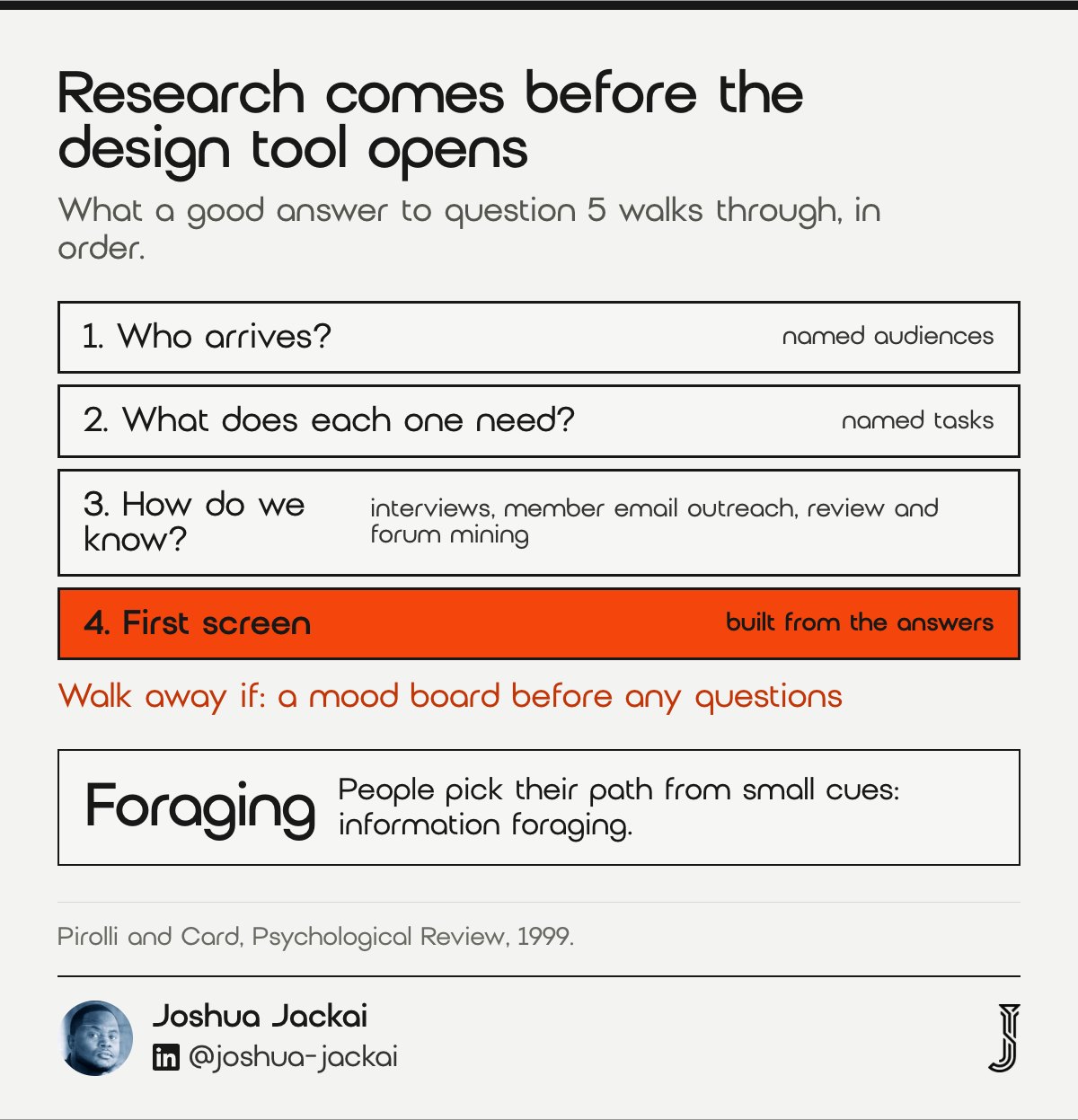
- Ask: who arrives, and what does each one need on the first screen?
- Good answer: named audiences, named tasks and a research method
- Methods I use: interviews, member email outreach, review and forum mining
- Walk away if: a mood board before any questions
This question shows you how a designer thinks. A designer who opens a design tool before asking who visits your site is designing for themselves. Listen for named audiences and named tasks, not a style preference.
People decide where to click from a heading, a link label, one line of copy. Pirolli and Card describe people adjusting their path to get the most useful information for the least effort. When the cue on a page doesn’t match what a visitor came for, they move to whatever looks more promising.
At W Communications, a Seattle communications and PR firm, four audiences landed on one homepage: media, clients, event bookers and readers. All four got the same opening paragraph. The rebuild gave each audience its own path, and it moved the founder’s credential, former Starbucks senior vice president, ahead of the story on the biography page (W Communications case study).
I run audience research before design on every project. For Copy Chief, a copywriting education business, that meant coach interviews, member email outreach and a custom Python scraper that fed Reddit comments to an AI model to pull out pain points and desires (Copy Chief case study). If a designer can’t say yet who your audiences are, ask how they’ll find out.
6. What will you need from me, and by when?
This is the one question about you. A good designer hands over a dated list of what they need from your side, each item with an owner. It suits any team where content sign-off involves more than 1 person. On my projects, content slips first: copy nobody has written, photos nobody has booked, a partner away.
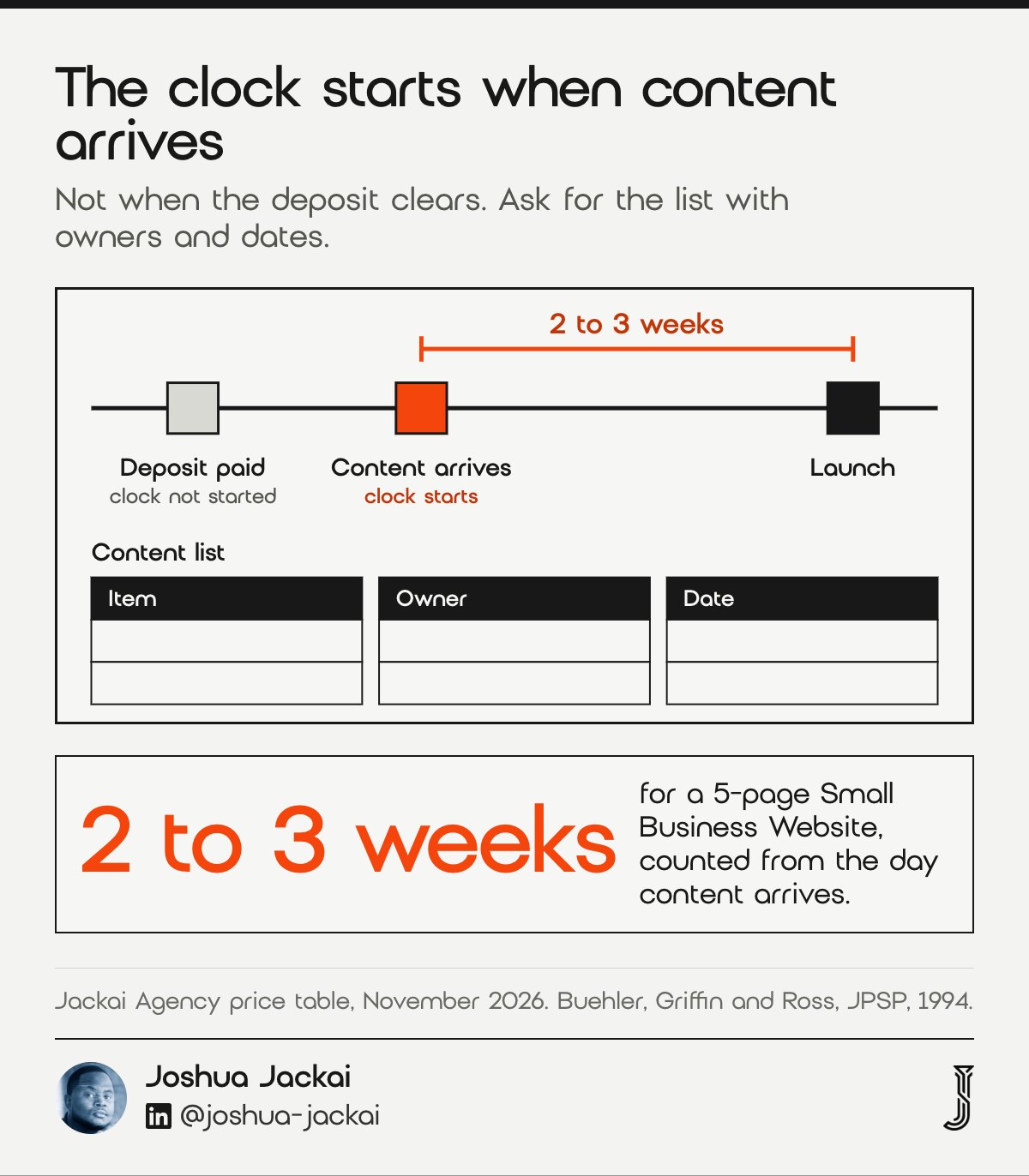
- Ask: what do you need from me, from whom, and by what date?
- Good answer: a list with items, owners and deadlines
- Also ask: does the launch clock start at the deposit or when content arrives?
- Walk away if: “Just send what you have”
Everyone plans this part too hopefully, and it isn’t a character flaw. In five studies of the planning fallacy, people’s predictions for their own tasks ran too optimistic, while observers guessing for them erred the other way (Buehler and colleagues, 1994).
“In Study 4, the optimistic bias was eliminated for Ss instructed to connect relevant past experiences with their predictions,” wrote Roger Buehler, Dale Griffin and Michael Ross (Journal of Personality and Social Psychology, 1994).
Ss means the study’s participants. The fix they found is simple: before you agree to a date, check how long your last brochure, proposal or website update took in real life, and plan from that.
Also ask when the clock starts. My 5-page Small Business Website takes 2 to 3 weeks from the day content arrives, not from the deposit. A fixed quote with a launch date that doesn’t say when the count begins has left out the part you control. If you’d rather not write the pages yourself, my copywriting add-on for that package is CA$1,325 for 5 pages (price table, November 2026), and it belongs in the quote from the start, not in week three.
7. How will we know if the new site is working?
A site that looks better isn’t the same as a site that works better. Ask what the designer will measure, where the numbers are recorded and what the starting number is before launch. A good answer names 1 metric you care about and where it lives, such as conversion rate in your own HubSpot.
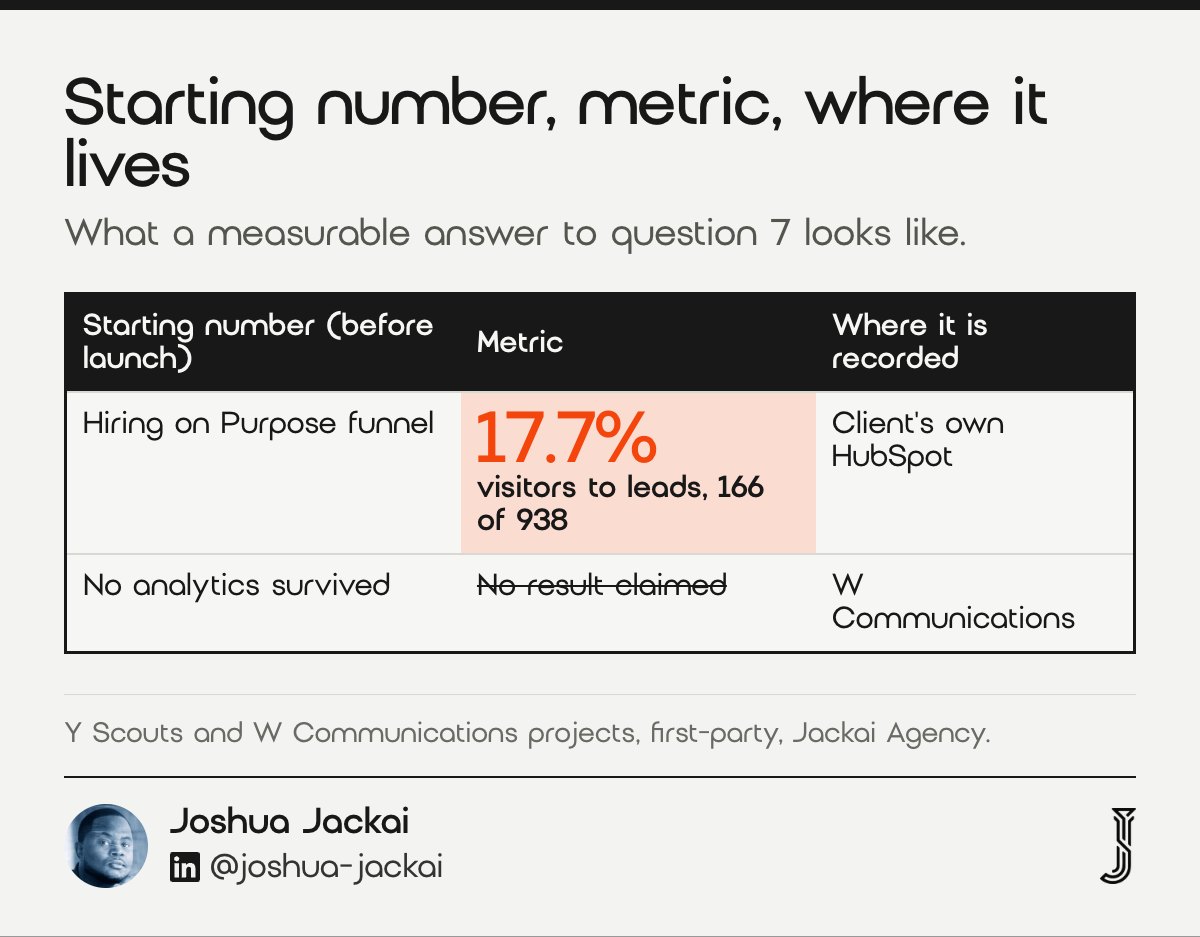
- Ask: what’s the starting number, and where is it recorded?
- Good answer: a metric, a baseline and the tool that holds both
- Also ask: will each lead arrive with its source attached?
- Walk away if: a guaranteed Google ranking or AI citation
Sometimes the honest answer is that there’s no before number. On the W Communications project, no analytics survived the rebuild, so that case study claims no result. If a designer always has a percentage ready, add one follow-up: compared with what?
At Y Scouts, an executive search firm in Scottsdale, the Hiring on Purpose funnel converts visitors to leads at 17.7%, 166 of 938, measured in the client’s own HubSpot (Y Scouts case study).
For S.T. Dupont Vancouver, the French luxury brand’s authorized dealer in Vancouver, online sales grew 5x in the first 90 days on WooCommerce against the last 90 days the old Wix store could sell (S.T. Dupont case study). Same licence. Same products. Same store.
“If a designer always has a percentage ready, add one follow-up: compared with what?” said Joshua Jackai, Vancouver web designer.
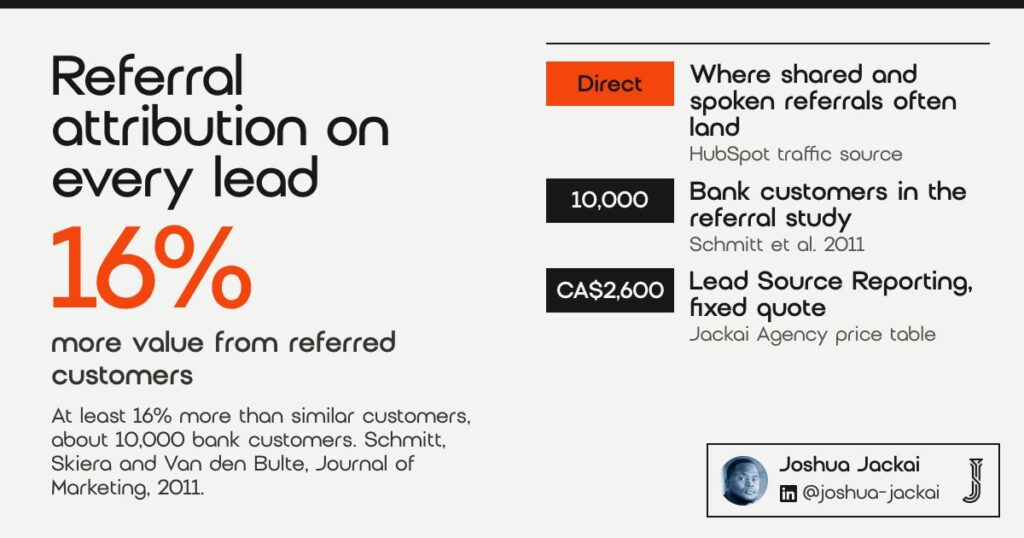
Then ask whether each lead will carry its source. My lead attribution setup puts a UTM tag on every link, carries those tags through the form into your CRM and separates AI referral traffic from direct visits. Without that, “where did this lead come from?” gets a guess for an answer.
8. What happens after launch?
Support after launch covers fixes, updates, backups and changes once the site is live. Most proposals give it one line, yet month four is when a plugin update breaks the contact form. Ask for a reply time and a rate in writing. Mine: replies within 1 business day, and care work at CA$279 an hour (pricing, November 2026).
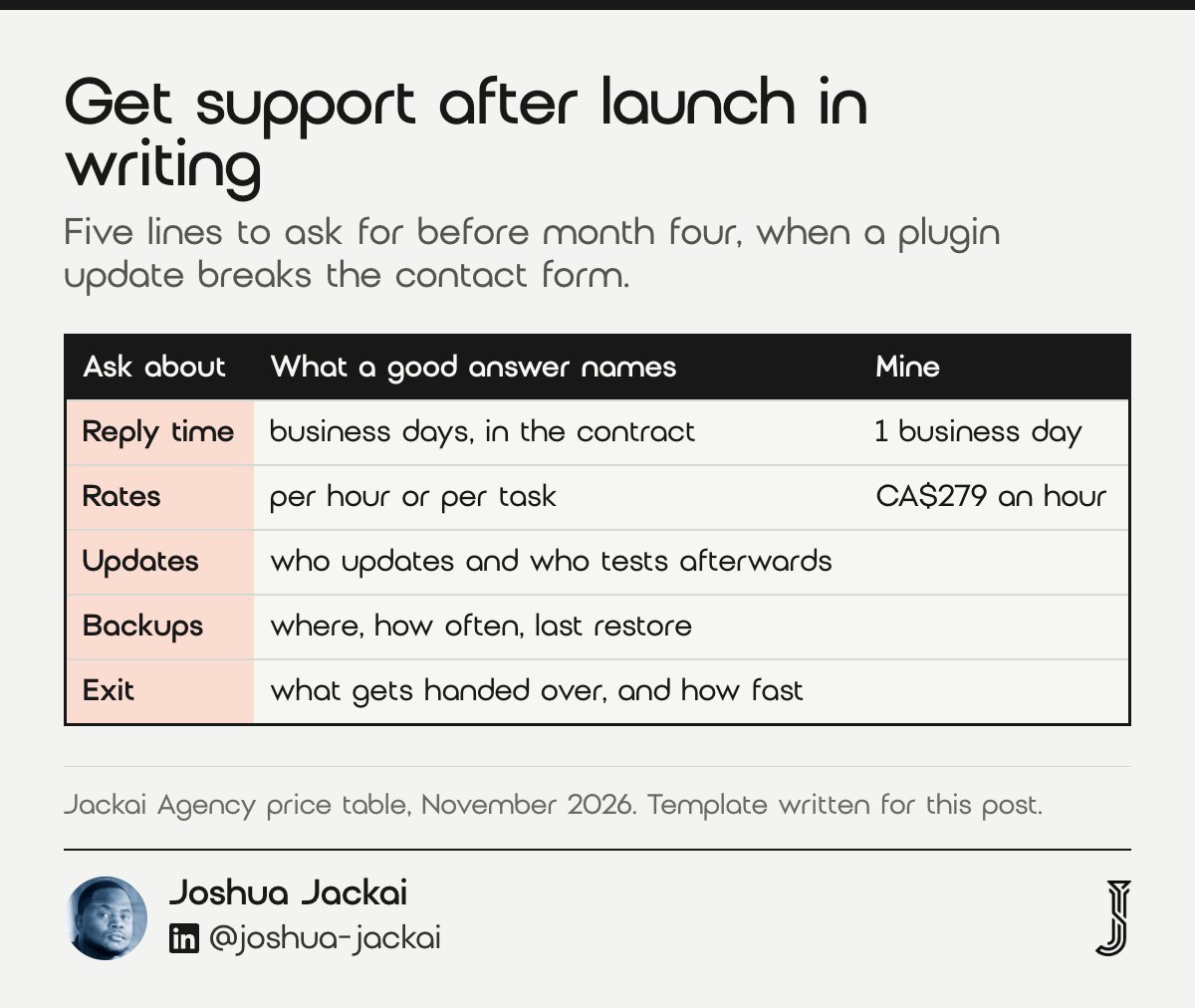
- Reply time: how fast, in business days, and is it in the contract?
- Rates: what does a change cost, per hour or per task?
- Updates: who updates WordPress, plugins and themes, and who tests afterwards?
- Backups: where are they kept, how often do they run, and has one been restored?
- Exit: if we part ways, what gets handed over, and how fast?
You don’t need my care plan to keep your site, because ownership stays with you from day one. That’s the test for any support offer: can you leave it without losing anything?
What I’d refuse from any designer, me included: a guarantee of a Google ranking or an AI citation. Nobody controls what a search engine or ChatGPT returns. A promise like that means the designer is guessing, or selling.
“A promise like that means the designer is guessing, or selling,” said Joshua Jackai, Vancouver web designer.
Retailers should add one more: who tested the checkout, and how? On the S.T. Dupont Vancouver store, Clover POS was connected and the payment path tested end to end before launch. An untested checkout is a support ticket waiting for a customer to find it.
Backups deserve their own follow-up. Ask when the designer last restored one. A backup nobody has restored is a hope, not a plan. And ask what happens to updates if you skip the care plan: who gets the alert when a plugin needs patching, you or nobody? A good designer answers that before launch, in writing, and hands you the logins to do it yourself.
How do you compare three proposals side by side?
Run each proposal through the same 8 questions and note the answers in one grid. Filter the matrix by stage and topic to see the good answer, the walk-away answer and the evidence. In my experience, exclusions and ownership split most proposals. Scope clarity matters: it helped explain how 93 projects were priced (Gopal and colleagues, 2003).
| Question | Item | A good answer sounds like | Walk away if you hear | Evidence |
|---|---|---|---|---|
| Who designs, who builds, who replies? | 1 | Names and roles, subcontractors named in the contract | “Our team handles everything” | Jackai Agency: 1 person does all four jobs |
| Who takes over if my designer leaves or is sick? | 1 | A named backup or a plan for the launch date | No answer | Judgment from projects |
| Is this a fixed quote? | 2 | One number, pages and platform named | An hourly estimate with no cap | 60% to 80% of projects overrun (Moløkken and Jørgensen, 2003) |
| What is not in the quote? | 2 | Exclusions in writing: copy, photos, licences, hosting fees | “We’ll figure that out later” | Requirement uncertainty and contract type, 93 projects (Gopal and colleagues, 2003) |
| Which currency, and is tax included? | 2 | CAD, tax stated | A US-dollar total with no tax line | Price table, November 2026 |
| What counts as one revision round? | 3 | A number per phase and a definition | “Unlimited revisions” | 2 rounds per phase on every Jackai Agency quote |
| Who owns the domain, hosting and admin login? | 4 | All in your company’s name from day one | “We host it for you, it’s easier” | 114-person lock-in survey (Opara-Martins and colleagues, 2016) |
| Who holds the licences and design files? | 4 | Licensed to you, files handed over at launch | Licences in the designer’s account | Opara-Martins and colleagues, 2016 |
| What research happens before design? | 5 | Named audiences, tasks and a method | A mood board before any questions | Information foraging (Pirolli and Card, 1999) |
| What do you need from me, and by when? | 6 | A dated list with an owner per item | “Just send what you have” | Planning fallacy, 5 studies (Buehler and colleagues, 1994) |
| What is the starting number, and where is it recorded? | 7 | A metric, a baseline and the tool that holds both | A guaranteed ranking | Y Scouts: 17.7%, 166 of 938, in HubSpot |
| Will each lead carry its source? | 7 | UTM tags carried through the form into the CRM | “Analytics will show it” | Jackai Agency lead attribution method |
| How fast do you reply, and what does a change cost? | 8 | A reply time and a rate in writing | “Just message me whenever” | 1 business day, CA$279 an hour (price table) |
| When did you last restore a backup? | 8 | A date and where backups live | “We’ve never needed to” | Judgment from projects |
Showing 14 of 14 rows.
Evidence column: peer-reviewed studies are linked in the Sources section; prices come from the Jackai Agency price table, November 2026.
The cheapest fixed quote with three walk-away answers isn’t the cheapest project. It’s the one where you pay the difference later, in your own hours.
What will each proposal really cost you?
This calculator adds what each proposal leaves out to its quoted price, and for an hourly estimate it shows the range with a 30% to 40% average overrun from surveys Moløkken and Jørgensen reviewed (2003). Enter your own numbers; the defaults are placeholders, not quotes.
Defaults are placeholders, not quotes. The only fixed constant is the 30% to 40% average overrun found across software estimation surveys (Moløkken and Jørgensen, 2003), applied to hourly estimates only. Leave a price at 0 to skip a proposal.
For reference, my own fixed prices in Canadian dollars, current in November 2026: a 5-page Small Business Website is CA$4,950 on Framer or CA$5,950 on WordPress. A Custom B2B Website of up to 5 pages starts at CA$7,450 on Framer, CA$8,950 on WordPress, CA$9,350 on Shopify and CA$9,700 on HubSpot. A Marketing Site of 8 to 15 pages starts at CA$10,495, and an ecommerce build or migration starts at CA$15,995. The full list and a quote calculator are on my pricing page.
Questions to ask a web designer, answered
These are the questions Vancouver and Canadian business owners ask me before they hire anyone, worded the way they come up in search. Each answer stands alone, with a price or a source where one exists. Prices come from my November 2026 table, and the overrun figure covers 60% to 80% of projects (Moløkken and Jørgensen, 2003).
How much should I pay a web designer in Canada?
It depends on pages, platform and who writes the copy. From my November 2026 price table, a 5-page Small Business Website is CA$4,950 on Framer or CA$5,950 on WordPress. A Custom B2B Website starts at CA$7,450, and a Marketing Site of 8 to 15 pages starts at CA$10,495.
What are the red flags when hiring a web designer?
Walk away from a domain registered in the designer’s name, an hourly estimate with no cap, unlimited revisions, no written exclusions, a mood board before any questions about your customers, and any guarantee of a Google ranking or AI citation. Each one moves risk from the designer to you.
Do I own my website if I pay someone to build it?
Only if the contract says so. Ask for the domain, hosting, administrator login, licences and design files in your company’s name. A lock-in paper built on a 114-person survey argues most customers miss what ties them to a vendor, so write ownership down before any deposit.
How much does it cost to have someone maintain my website?
Most designers charge by the hour or by a monthly plan. My care plan is CA$279 an hour, with replies within 1 business day, and it’s optional because you own the site from day one. Ask any designer who updates plugins and who tests the site afterwards.
Is it worth hiring a web designer instead of building it myself?
It’s worth it when your site has to bring in leads or sales and your hours cost more than the fee. Ask how long your last website update took. Planning fallacy research found people underestimate their own task times, so price your own hours honestly before deciding.
Ask me every one of these on a 30-minute call
I design and build business websites from Vancouver on a fixed quote, and I’d rather be compared. Bring this list of questions to ask a web designer and run all 8 on me. On the same call I measure your starting numbers: mobile conversion rate, AI-referred traffic and lead count. A Website Audit is CA$995, credited within 30 days.
You keep those numbers whether or not you hire me. If we go ahead, you get a fixed quote, in writing, before any work starts, with the exclusions listed and ownership in your name.
Before the call, take ten minutes with your current site:
- Look up who the domain is registered to.
- Check whether you have your own administrator login, not an editor role.
- Find the last backup date and who holds it.
- Pull last month’s leads and count how many carry a source.
- Write down how long your last website change took to go live.
Book a 30-minute call, or start with a Website Audit.
Sources
Peer-reviewed research
- Buehler, R., Griffin, D., and Ross, M. (1994). Exploring the “planning fallacy”: Why people underestimate their task completion times. Journal of Personality and Social Psychology, 67(3), 366-381.
- Fogg, B. J., Soohoo, C., Danielson, D. R., Marable, L., Stanford, J., and Tauber, E. R. (2003). How do users evaluate the credibility of Web sites? Proceedings of the 2003 Conference on Designing for User Experiences, 1-15.
- Gopal, A., Sivaramakrishnan, K., Krishnan, M. S., and Mukhopadhyay, T. (2003). Contracts in offshore software development: An empirical analysis. Management Science, 49(12), 1671-1683.
- Lindgaard, G., Fernandes, G., Dudek, C., and Brown, J. (2006). Attention web designers: You have 50 milliseconds to make a good first impression! Behaviour and Information Technology, 25(2), 115-126.
- Moløkken, K., and Jørgensen, M. (2003). A review of software surveys on software effort estimation. Proceedings of the 2003 International Symposium on Empirical Software Engineering, 223-230.
- Opara-Martins, J., Sahandi, R., and Tian, F. (2016). Critical analysis of vendor lock-in and its impact on cloud computing migration: A business perspective. Journal of Cloud Computing, 5, article 4.
- Pirolli, P., and Card, S. (1999). Information foraging. Psychological Review, 106(4), 643-675.
Industry and vendor data (not peer reviewed)
- Jackai Agency client results (first-party). Snappy Kraken, W Communications, Copy Chief, Y Scouts, S.T. Dupont Vancouver
- Jackai Agency price table, November 2026 (first-party prices, CAD). Jackai Agency pricing