AI marketing systems

AI Systems That Do

The Repetitive Half

Automations built on the stack you already pay for, aimed at the manual steps between having an idea and shipping something. Not a replacement for your team, a removal of the parts they hate.
Proof

What automation has actually returned

527%

MoM growth
Month-over-month YouTube viewer growth for Copy Chief, driven by a Custom GPT content pipeline.

80%

less editing
Editing time cut on the same pipeline, which is what made the publishing cadence sustainable.

45%

less friction
Operational friction removed from Copy Chief publishing SOPs and funnel operations.
The problem

Most marketing teams are bottlenecked on production, not ideas
The plan is rarely the constraint. The constraint is that turning one recorded call into a blog post, five shorts, three emails and a landing page takes a week, so it does not happen.
Automation is worth building at exactly the point where a task is repetitive, rule-governed and already understood. Automating a process nobody has agreed on yet just makes the disagreement faster.
Custom GPT pipelines trained on your own material, not generic prompts
Content repurposing from one source asset into every channel format
Documented SOPs so the system survives the person who built it
Project work by Jackai Agency
How it works

Map the process before automating any of it
Every engagement starts by writing down what actually happens today, step by step, including the steps people do not admit to. That document is usually where the savings are found, before any tooling is involved.
Then the repetitive steps get automated, the judgement steps stay human, and the handoffs between them get made explicit.
Process mapping first, tooling second
Built on tools you already license where possible
Handover documentation so your team owns it afterwards
See case studies ↗
Project work by Jackai Agency
What gets built

Where these systems usually land

Scoped and priced before anything is built, from $5,000 to $50,000.
Content production pipelines by Jackai Agency
Content

Content production pipelines

One source asset becomes every channel format, on a schedule rather than in bursts.
Catalogue and data automation by Jackai Agency
Catalogue

Catalogue and data automation

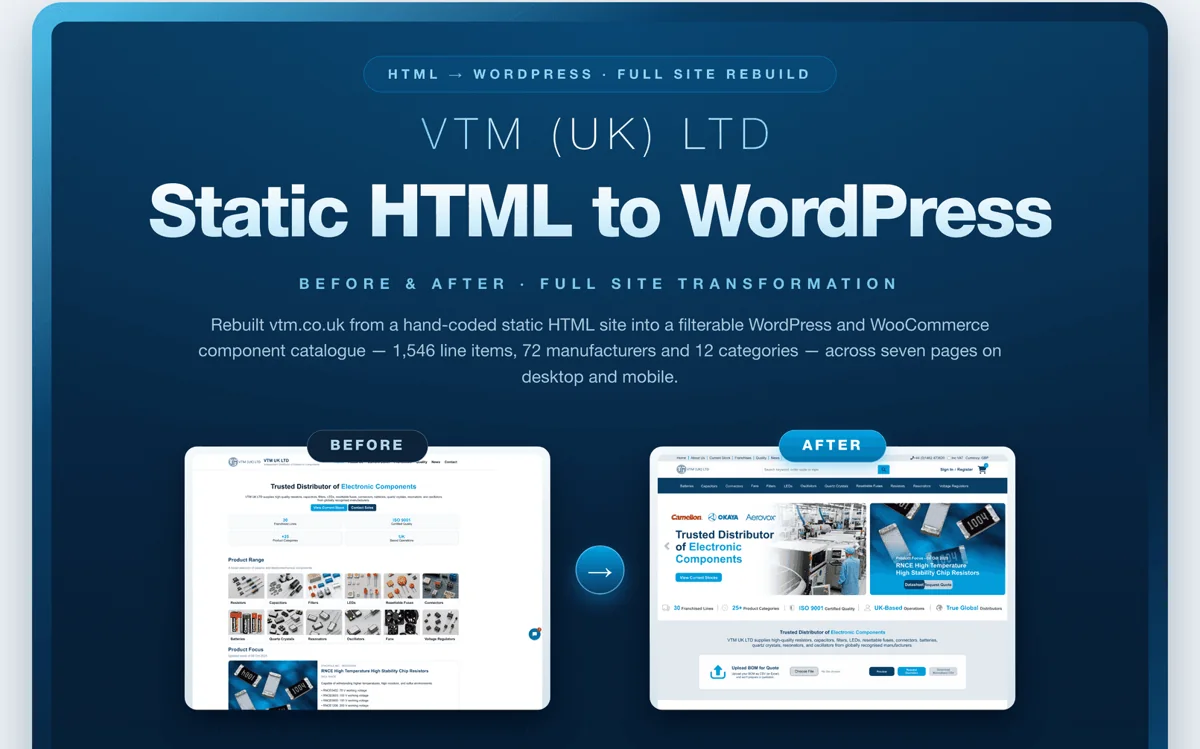
Bulk product, image and metadata work. The VTM (UK) build carried 1,546 catalogue items.
Marketing operations SOPs by Jackai Agency
Ops

Marketing operations SOPs

Documented, testable processes so campaigns stop depending on one person remembering.
How engagements run

Scoped and priced before anything starts

Every engagement is quoted against a written scope, so the number does not move once work begins. Projects run $5,000 to $50,000 depending on page count, integrations and how much of the content already exists. Most land in 6 to 12 weeks.
The first two weeks are usually the least glamorous and the most valuable: working out what is actually being sold, to whom, and what the current numbers say. Skipping that is how agencies end up delivering something beautiful that does not move revenue.
You work with me directly. There is no account manager relaying briefs to a production team, which is the main reason smaller engagements can move quickly without losing detail.
Fixed scope and fixed price agreed before the first design
Weekly written updates, not status meetings
Analytics and tracking wired in so results are measurable afterwards
Handover documentation so your team can maintain what ships
What projects cost ↗
Project work by Jackai Agency
Why it works

Evidence first, opinion second

Most agency proposals are built on taste. Someone senior looks at your site, says what they would change, and the invoice follows. That is fine when the taste is good and expensive when it is not, and either way there is no way to tell in advance which one you bought.
The work here starts from what can be measured: what the analytics already say, what the buyers say when asked directly, and what happened the last time a similar change shipped. On the Copy Chief Escape Velocity campaign that meant interviewing working copywriters before designing a single ad, because that audience writes direct response for a living and rejects generic creative on sight. Pain-point creative then beat benefit-led creative in testing, and the campaign averaged 55.03x ROAS with a 130.05x peak.
That is also why the numbers on this site name their campaign. A figure without its context is not evidence, it is decoration. Escape Velocity did 55.03x. The membership funnel did 31x across 215 paid subscriptions. Those are different campaigns with different offers, and quoting either one as a general result would be misleading.
The practical effect is fewer surprises. You see the reasoning before the design, the design before the build, and the numbers after launch rather than a report describing how well it went.
Analytics and heatmap review before design decisions
Direct buyer research where the audience is specialised
A/B testing on message, not just button colour
Every claim traceable to a named campaign
Project work by Jackai Agency
FAQ

Questions, answered

Find out what is worth automating

Bring your current process. Twenty minutes, an honest read on what would actually save time and what would not.
Ready to turn your website into a 5-figure pipeline machine? Book a Lead Gen Audit Now
×

Privacy Preference Center