Post-Click Mismatch: Why Ads Get Clicks and the Page Loses the Sale
Why an ad can earn healthy clicks while the page loses the sale, and how to tell from five numbers whether the ad or the page is the problem.
 Joshua Jackai
14 min read
Joshua Jackai
14 min read
A copywriter is deciding whether to spend rent money on herself. She taps an ad that names the exact thing she is stuck on. The page that opens never repeats it. Not a bad offer. Not the wrong person. A post-click mismatch, and the click is already paid for.
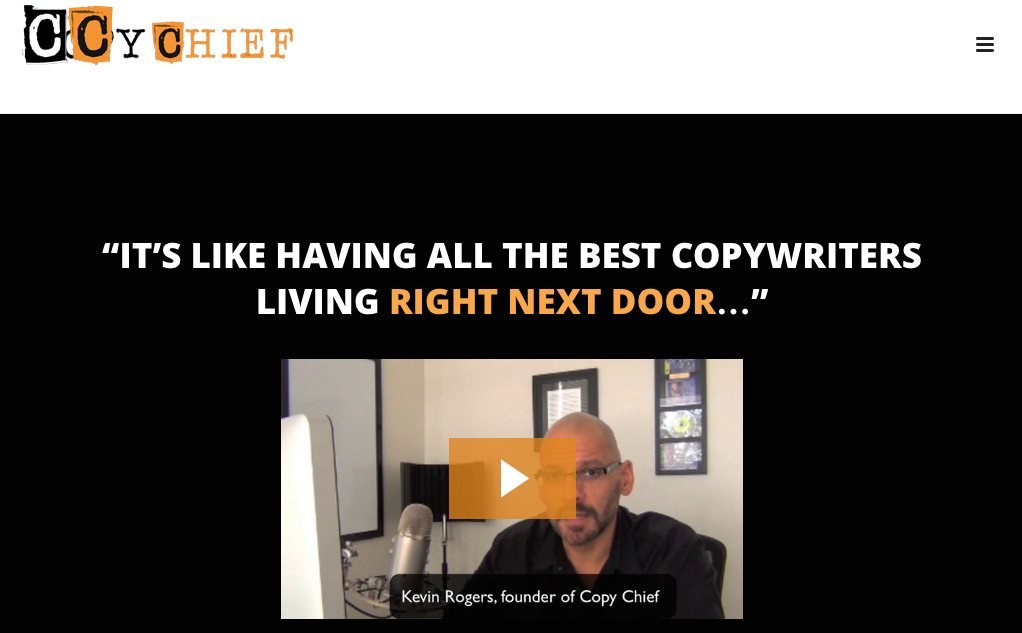
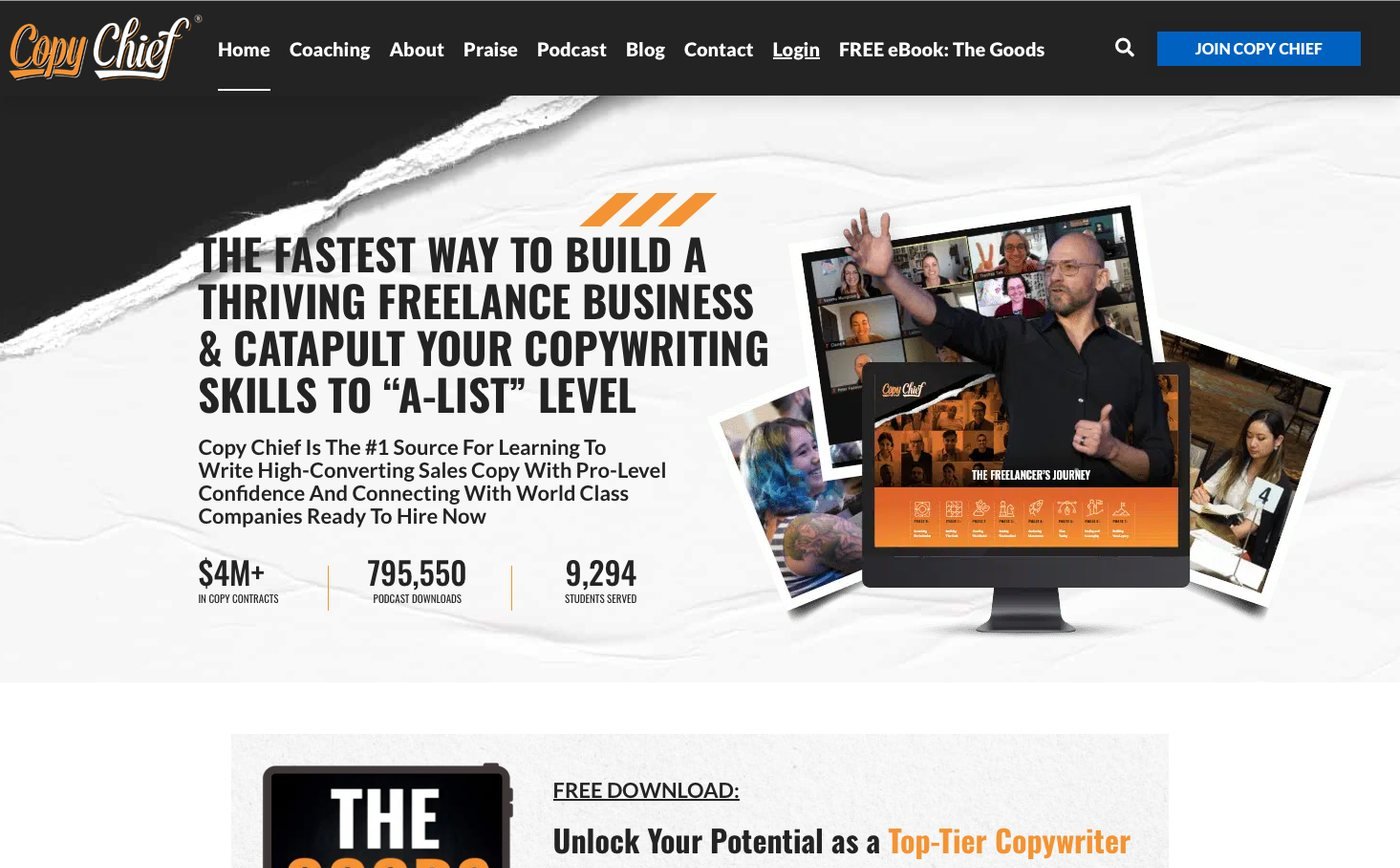
That was the Copy Chief membership campaign before I rebuilt its funnel. Copy Chief is a copywriting education business in St. Petersburg, Florida, and its paid traffic was landing on a page written for people who had already joined. The ad did its job. The page answered a different question.
This guide is the diagnosis, not the build: the five numbers that show whether the ad or the page is losing the sale, the six kinds of post-click mismatch I check for, a 30-minute check, and how to prove a fix worked.
In this guide
What is post-click mismatch?
Post-click mismatch is when the page a visitor lands on answers a different question from the ad they clicked. The ad sets up a want: a product, a price, a fix for a problem it named. The page opens with something else, such as the company story, a general homepage or a page written for existing customers.
You can spot post-click mismatch in the numbers. Click-through rate and cost per click look healthy, because the ad is working. Sales or leads stay flat, because the money is lost after the click. So the campaign takes the blame: the targeting gets rebuilt, the creative gets refreshed, and nothing improves.
Researchers call the moment after the tap context transfer. Looking at more than 30,000 landing pages from search ads, Becker and colleagues (2009) found that conversion rates varied considerably with the type of page the ad sent people to: a homepage, a category page or a page of site search results. Page type is not the only factor, they noted, but it is one you control.
Is the ad or the page losing the sale?
To find a post-click mismatch, read five numbers together before you change a single campaign setting. Each one alone will mislead you.
- Click-through rate: the share of people who saw the ad and tapped it.
- Cost per click: what each tap cost you.
- Bounce rate: the share who left after one page. Google Analytics 4 shows engagement rate by default, and bounce rate is its inverse.
- Time on page: GA4 calls it average engagement time.
- Form starts or add-to-cart: the first move toward the sale.
Meta Ads Manager gives you the first two. GA4 gives you the rest, as long as every ad link carries UTM tags so the visit is filed under the right campaign. If your links are not tagged, fix that first. My lead attribution method shows that setup link by link.
Bounce is a fair signal here. In a study of sponsored search ads, Sculley and colleagues (2009) found bounce rate was an effective measure of whether people were satisfied after clicking, and that a high bounce rate can mean poor return for the advertiser.
| What the numbers show | Where the problem is | What to check first |
|---|---|---|
| Low click-through, high cost per click | The ad or the audience | Creative and targeting |
| Healthy click-through, normal cost per click, high bounce, short time on page | The page: this is the post-click mismatch signature | The first screen of the page against the ad |
| Long time on page, few form starts | The decision point | The offer, how the price is shown, proof near the button |
| Plenty of form starts, few finished forms | The form or the checkout | Field count, error messages, the payment step |
| Click-through rising, sales flat | A new ad promise the old page never made | The page headline against the new creative |
Then do the arithmetic. Cost per acquisition is cost per click divided by the page’s conversion rate. At $2 a click and a page that converts 2% of visitors, each sale costs $100. Same $2 click, a page that converts 4%: each sale costs $50. The ad spend per click did not change. The page halved the cost. Those numbers are an illustration, not a client’s.
For a real reference point: on Copy Chief’s Escape Velocity campaign, which ran Meta ads into a mobile-first funnel, landing-page conversion was 10.1%, click-through went from 0.9% to 3.0%, and cost per acquisition fell from $42 to $22. I worked on both the ads and the funnel for Escape Velocity, so I do not split the credit between them.
Why does information scent decide what happens to your ad spend?
Information scent comes from Peter Pirolli and Stuart Card’s information foraging theory. People judge whether a path is worth following from the cues they can see right now, before they commit (Pirolli and Card, 1999). An ad is a cue, and the first screen of the landing page is the next one: it either confirms the trail or breaks it.
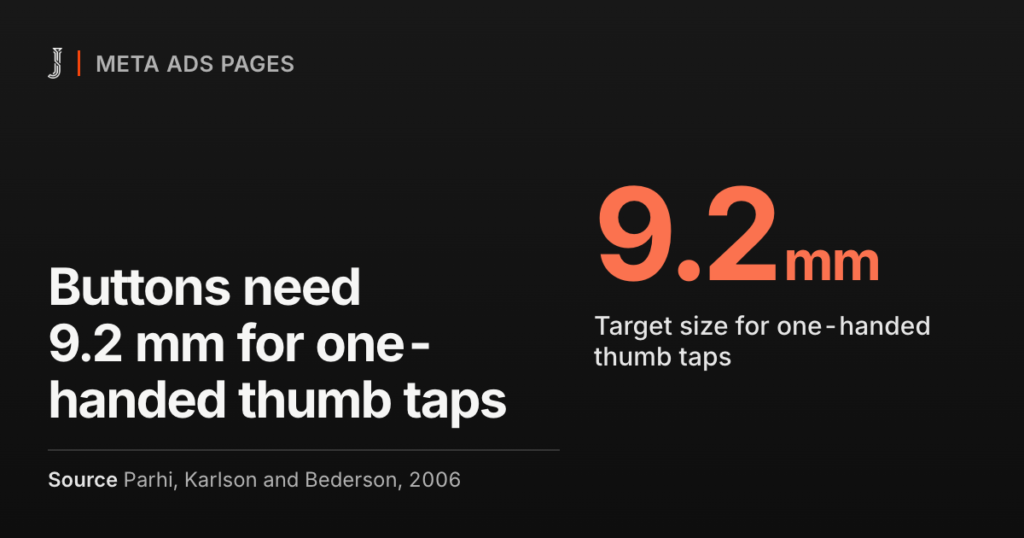
When the information scent breaks, the visitor does not dig, and on a phone digging costs more. Ghose, Goldfarb and Han (2013) found that smaller screens raise the cost of browsing, and that links at the top of the screen were especially likely to be clicked on phones. On the Meta campaigns I run, most clicks arrive on a phone, so the first screen carries the whole argument.
There is a quieter cost too. Lee and Labroo (2004) showed that people rate a product more favorably when what came just before makes it easier to bring to mind. An ad that sets up an idea and a page that continues it give the visitor that ease. A page that changes the subject throws it away.
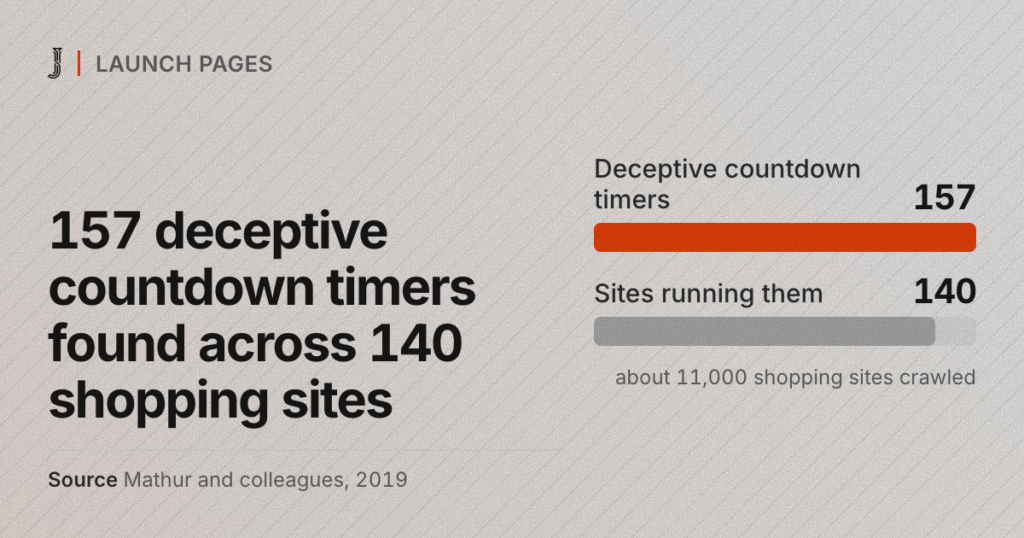
The worst case feels like a trick. Darke and Ritchie (2007) found that deceptive advertising creates distrust that carries over to later ads, from the same advertiser and from others. A page that drops the discount the ad showed can read as bait.
So the money works like this: ad spend buys the click, and message match decides whether the click turns into anything. When the scent breaks on arrival, every dollar of ad spend behind that ad pays for people to arrive and leave. That is post-click mismatch in money terms.
What are the common types of post-click mismatch?
It rarely looks like an obvious error. It looks like a reasonable page in the wrong place. These are the six I check for, in this order.
- Promise mismatch. The ad names a problem or an outcome, and the page headline does not. This is the most common message match failure.
- Reader mismatch. The page is written for someone further along: members, existing customers, people who already know the brand.
- Offer mismatch. The ad shows a price, a discount, a free trial or a deadline, and the page hides it, changes the terms or never mentions it.
- Destination mismatch. The ad goes to the homepage or a company story page, so the visitor has to hunt for the product the ad just showed them.
- Device mismatch. The ad is seen on a phone and the page was designed on a desktop. The action sits below the fold and the headline wraps to six lines.
- Goal mismatch. The campaign is set to count engagement or landing page views, so the platform finds people who click and do not buy.
The first four are message match problems. The fifth is a layout problem with the same effect. The sixth makes the others look worse than they are, which is why I check it before rewriting a word.
The same break happens without ads. On the Advisor Websites project, a Vancouver SaaS platform for financial advisors, an advisor who clicked an old webinar invitation landed on a registration page for a session that had already aired. Email clicks follow information scent the same way paid clicks do.
What did post-click mismatch look like on Copy Chief’s membership funnel?
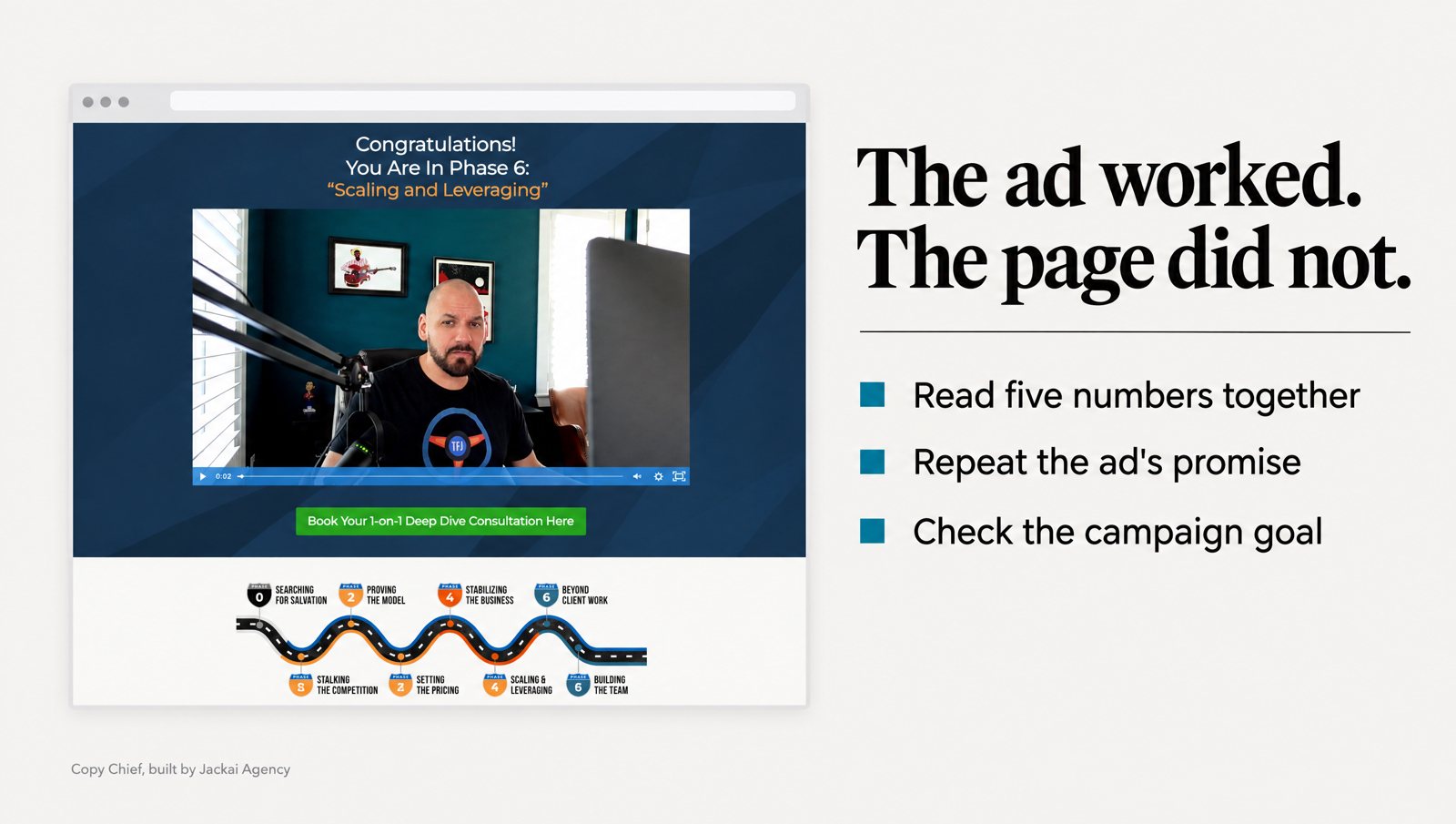
Copy Chief sells a membership to working copywriters. For the Membership Funnel Redesign campaign, Meta traffic had been going to the shared membership page. Three things were wrong with that page for a paid visitor, and none of them were about the offer.
- The ad’s promise was missing. The words that earned the click appeared nowhere on the page, so the information scent ended at the door.
- The copy was for members. It addressed people who already belonged, so a new visitor could not see herself in it.
- The sign-up sat low. It appeared once, below the fold.
There was a fourth problem, upstream. The creative was judged on engagement rate instead of paid subscriptions, so the ads that scored best were the ones least likely to sell.
Here is what I changed:
- A separate funnel: mobile-first, built in ClickFunnels for paid traffic only, apart from the member-facing site.
- The promise, word for word: the ad’s line repeated as the first line of the page. That is message match in its plainest form.
- One ask: the same action, in identical wording, on every screen of the funnel.
- A new buying goal: creative bought against paid subscriptions, not engagement, and adjusted on the funnel result.
The Membership Funnel Redesign campaign ran from August to October 2023 and returned 31x on ad spend across 215 paid subscriptions.
Two honest limits. The message match change shipped together with the new funnel and the new buying goal, so it was not measured in isolation. And the campaign ran to a deadline: the 31x belongs to the Membership Funnel Redesign campaign of August to October 2023, not to the funnel forever. The full before and after is on the Copy Chief case study.
Is your ad platform rewarding the wrong clicks?
This is the mismatch people miss, because it never shows on the page. In my experience running Meta ads, the delivery system goes looking for more of whatever you tell it to count. Tell it to count engagement or landing page views, and it finds people who engage or land. Plenty of them were never going to buy.
A campaign buying the wrong click shows healthy click-through, cheap clicks and high bounce: the same signature as a page problem. So before you rewrite the page, check what the campaign is set to count. If it is not counting the sale or the lead, fix that first. On Copy Chief’s Membership Funnel Redesign campaign, both were wrong at once.
A rising click-through rate can hide a post-click mismatch as well. When new creative lifts click-through and the page stays the same, the new ad may be making a promise the old page never made. That is why I re-read the landing page every time an ad wins.
How do you run a message match check on your own campaigns?
Set aside 30 minutes and one spreadsheet. Run it for every ad that has spent money in the last 30 days.
- Screenshot the pair. Capture each live ad and its landing page on your own phone, side by side. Not the desktop preview.
- Write the two first lines. Put the ad’s promise in one line, then copy the page’s first line next to it. If you cannot draw a straight line between them, the information scent is broken and you have found a post-click mismatch.
- Check the offer. Every price, discount, deadline or free thing in the ad should appear on the first screen, with the same terms.
- Count the taps. Count the steps from ad to purchase or booking, and remove any page whose only job is to tell your story. The founding story belongs on the About page.
- Check who the page talks to. If it uses words only an existing customer would know, a new visitor will read it as not for them.
- Place each ad in the table. Pull the five numbers for each ad and find its row in the diagnostic table above.
- Check the campaign goal. In Ads Manager, confirm the campaign counts the sale or the lead, not engagement.
If the check turns up more than one bad pairing, fix the one with the most ad spend behind it first. One fixed pairing gives you a cleaner read than five changes at once.
What looks like a post-click mismatch but is not?
Not every high bounce is a message match problem. Rule these out before you rewrite any copy.
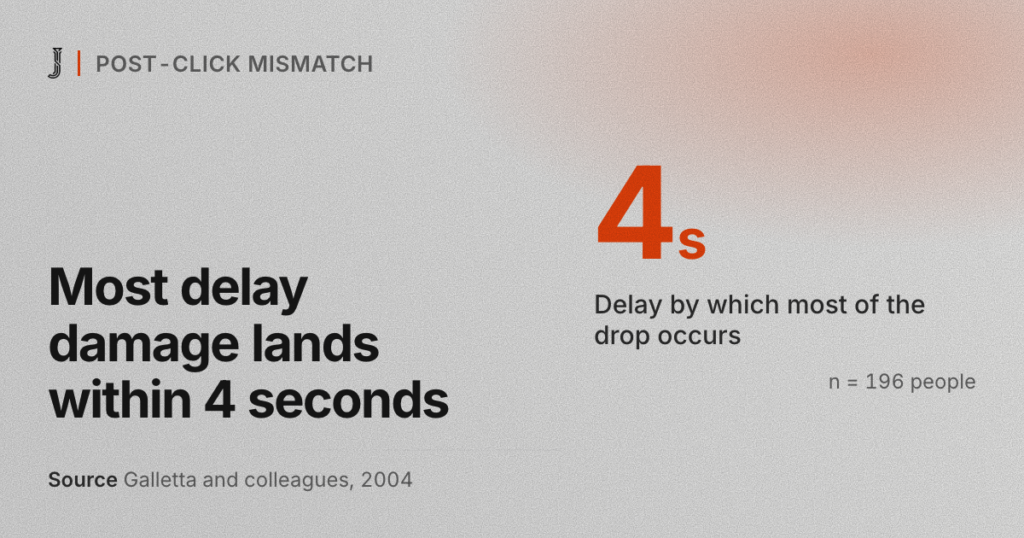
- A slow page. In a study of 196 people facing delays from 0 to 12 seconds, Galletta and colleagues (2004) found performance, attitudes and intention to return fell as the delay grew, with most of the drop in performance and intentions by about 4 seconds. Test your page on a mid-range phone on mobile data.
- Broken tracking. If a redirect strips the UTM tags, GA4 files the visit as direct traffic, and the campaign looks like it sends nobody who converts. Click one ad yourself and follow the visit end to end.
- The wrong audience. Broad ad copy can earn healthy click-through from people who were never buyers. No page fixes that.
- A long B2B decision. A first visit that bounces can be a buyer who returns through search a week later. Li and Kannan (2014) found that each channel’s share of credit came out significantly different under their model than under the metrics firms commonly use. Look at returning visitors and assisted conversions, not only the last click.
- Returning visitors. Someone who has seen the page three times does not need the introduction again. Send retargeting and email traffic to the next step.
How do you prove the fix worked?
Once you have fixed a post-click mismatch, give it time. Lewis and Rao (2015) ran 25 large field experiments with major US retailers and brokerages and found the median confidence interval on return on investment was more than 100 percentage points wide. Ad results are noisy, so a one-week swing on a small budget tells you very little.
This is the order I work in:
- Fix the first screen first: headline repeats the ad, the offer is visible, one action. That screen is where information scent is kept or lost.
- Hold the rest flat: same ad, same audience, same daily budget, before and after.
- Read the page numbers first: bounce and form starts move before sales do, and they belong to the page.
- Log what else moved: price, creative, season, a launch email.
That last line matters. On Chai Ghai, a Vancouver tea brand selling masala chai on Shopify, the case study records 12.6x return on ad spend with the same product, the same price and the same city. It also says micro-influencer volume carried a share of that result, and that splitting paid from organic on a brand that size is not honest arithmetic. Name the constraint that held. Name what else moved.
What I would not do
- Rebuild the whole ad account because sales are flat while click-through is healthy.
- Refresh the creative to fix a post-click mismatch. A better ad sends more people into the same leak.
- Send paid traffic to the homepage because it is the best-looking page on the site. A homepage serves people who are browsing, while an ad visitor arrives with one question.
- Redesign the whole website. The fix is usually one page per campaign, and sometimes one screen.
- Call a winner on a test that saw 200 visitors.
What does it cost to fix a post-click mismatch?
If the diagnosis says the page is the leak, the fix is a campaign page built for the ad: message match in the first line, the offer on the first screen, one action. Landing Page Design at Jackai Agency starts at CA$3,795 and takes 1 to 2 weeks. It is a fixed quote with two revision rounds per phase, and you own the page.
If leads arrive but nobody can say which ad sent them, start with Lead Source Reporting instead: 2 weeks, CA$2,600, so every lead reaches your CRM with its source attached. Every other price is on the pricing page.
The copywriter at the top of this post did not need a better offer. She needed the page to finish the sentence the ad started.
If your ads get clicks and sales stay flat, book a 30-minute call about your landing page and bring the last 30 days of your five numbers. I’ll tell you whether you have a post-click mismatch or an ad problem before anyone touches the campaign or raises the ad spend.
Sources
Peer-reviewed research
- Becker, H., Broder, A., Gabrilovich, E., Josifovski, V., and Pang, B. (2009). What happens after an ad click? Quantifying the impact of landing pages in web advertising. Proceedings of the 18th ACM Conference on Information and Knowledge Management (CIKM), 57-66.
- Darke, P. R., and Ritchie, R. J. B. (2007). The defensive consumer: Advertising deception, defensive processing, and distrust. Journal of Marketing Research, 44(1), 114-127.
- Galletta, D., Henry, R., McCoy, S., and Polak, P. (2004). Web site delays: How tolerant are users? Journal of the Association for Information Systems, 5(1), 1-28.
- Ghose, A., Goldfarb, A., and Han, S. P. (2013). How is the mobile Internet different? Search costs and local activities. Information Systems Research, 24(3), 613-631.
- Lee, A. Y., and Labroo, A. A. (2004). The effect of conceptual and perceptual fluency on brand evaluation. Journal of Marketing Research, 41(2), 151-165.
- Lewis, R. A., and Rao, J. M. (2015). The unfavorable economics of measuring the returns to advertising. The Quarterly Journal of Economics, 130(4), 1941-1973.
- Li, H., and Kannan, P. K. (2014). Attributing conversions in a multichannel online marketing environment: An empirical model and a field experiment. Journal of Marketing Research, 51(1), 40-56.
- Pirolli, P., and Card, S. (1999). Information foraging. Psychological Review, 106(4), 643-675.
- Sculley, D., Malkin, R. G., Basu, S., and Bayardo, R. J. (2009). Predicting bounce rates in sponsored search advertisements. Proceedings of the 15th ACM SIGKDD International Conference on Knowledge Discovery and Data Mining, 1325-1334.