























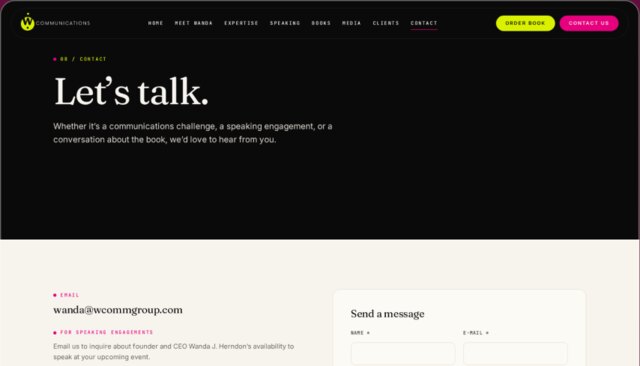



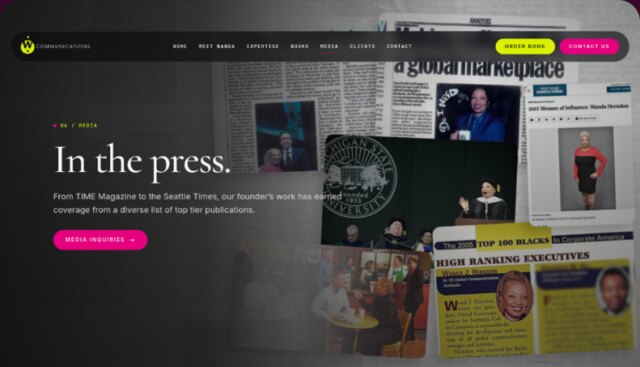


HubSpot builds, before and after
Scroll inside each frame to read the whole page.
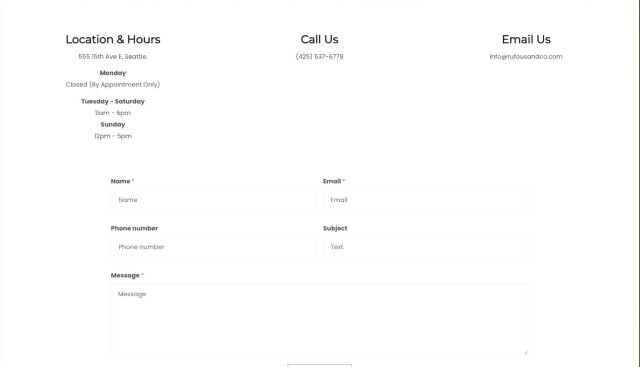
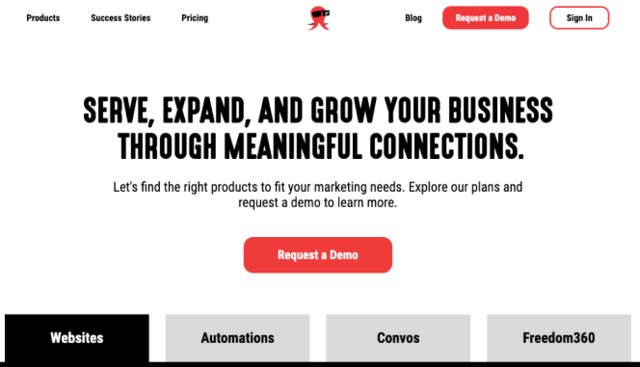
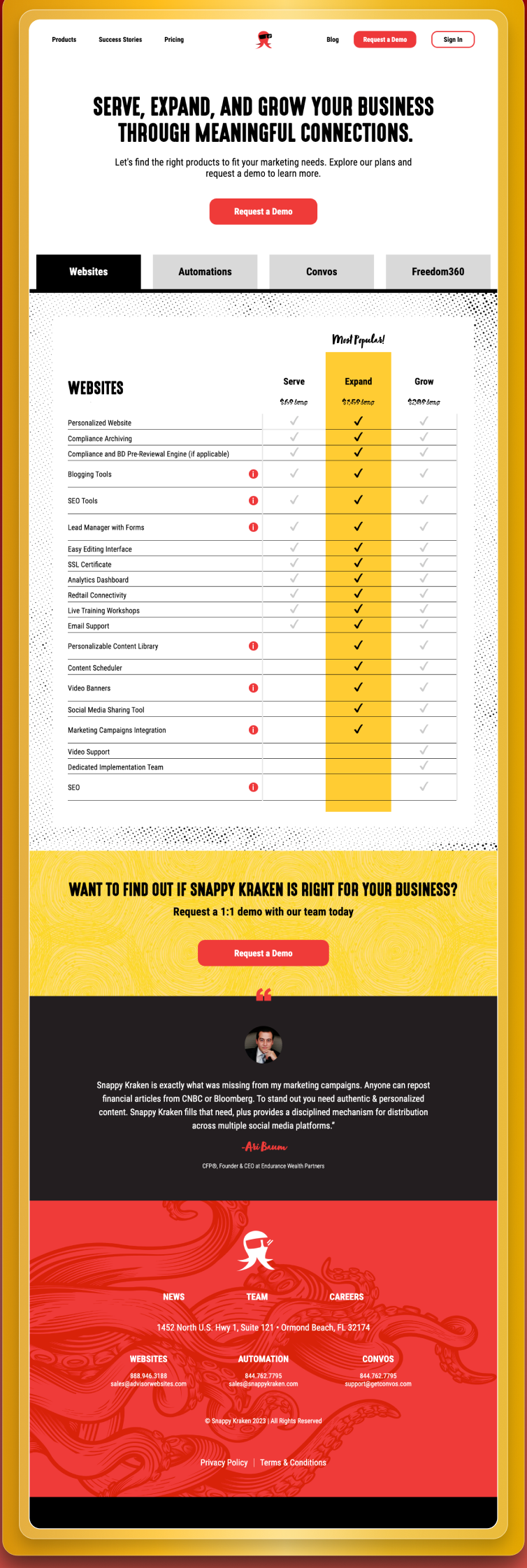
Snappy Kraken
7 figures of ARR influencedA B2B FinTech SaaS selling marketing systems to financial advisors, taken from Figma to HubSpot CMS.


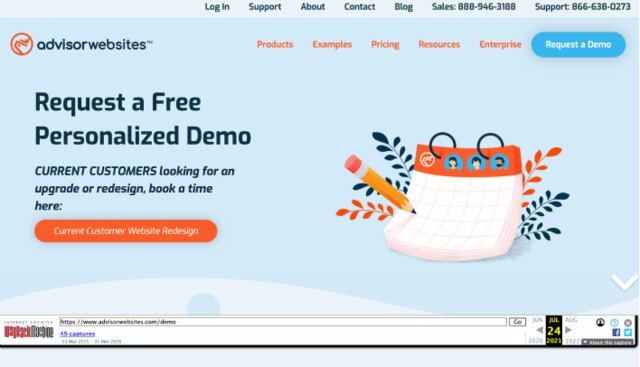
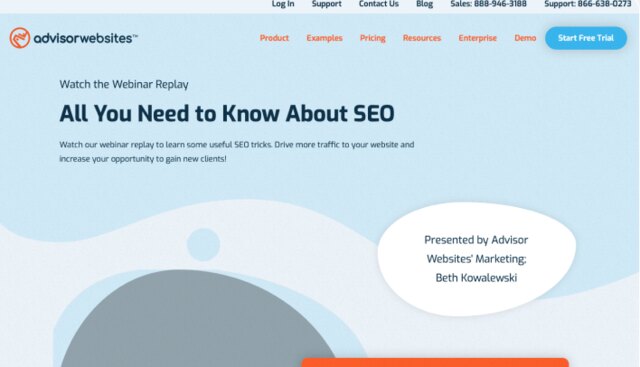
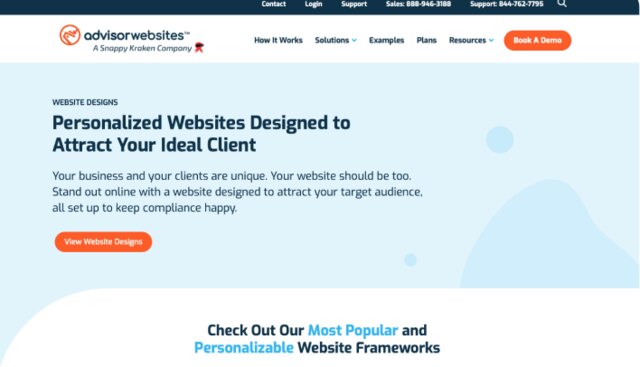
Advisor Websites
5 page types rebuiltA Vancouver SaaS platform serving financial advisors, homepage rebuilt on HubSpot.
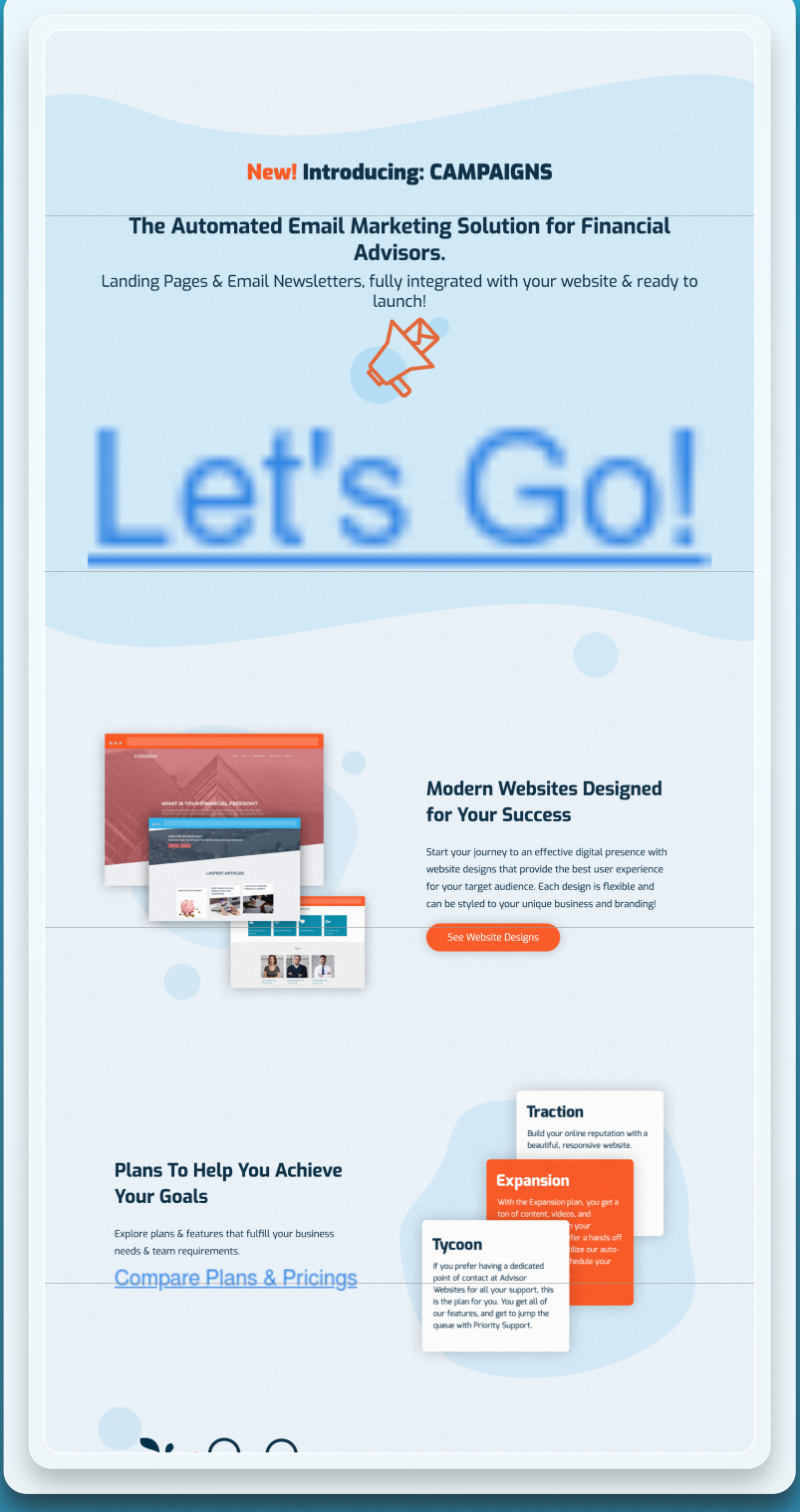
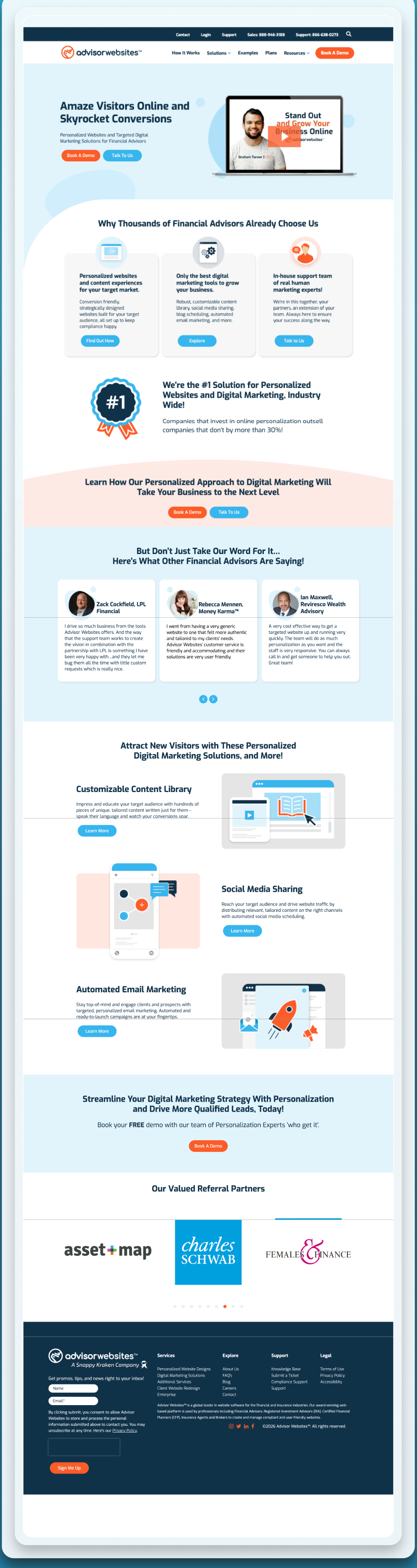
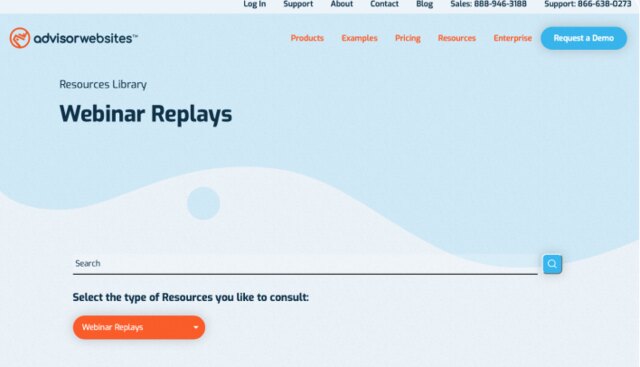
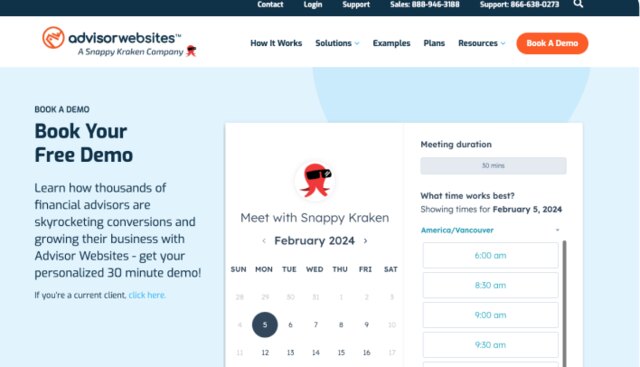
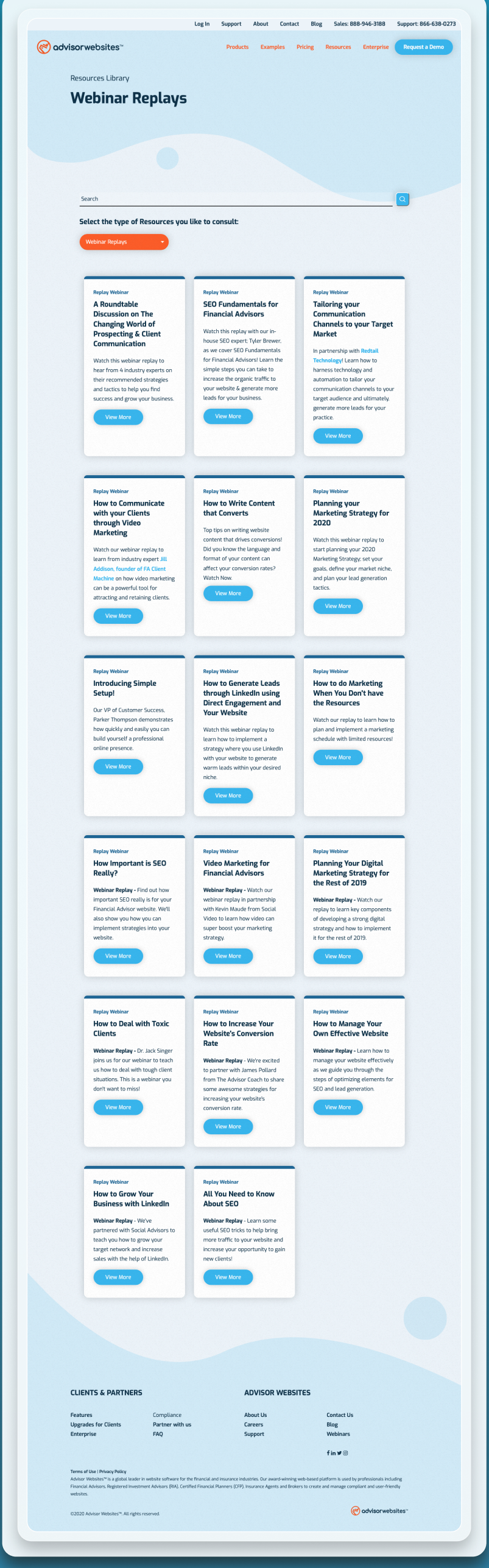
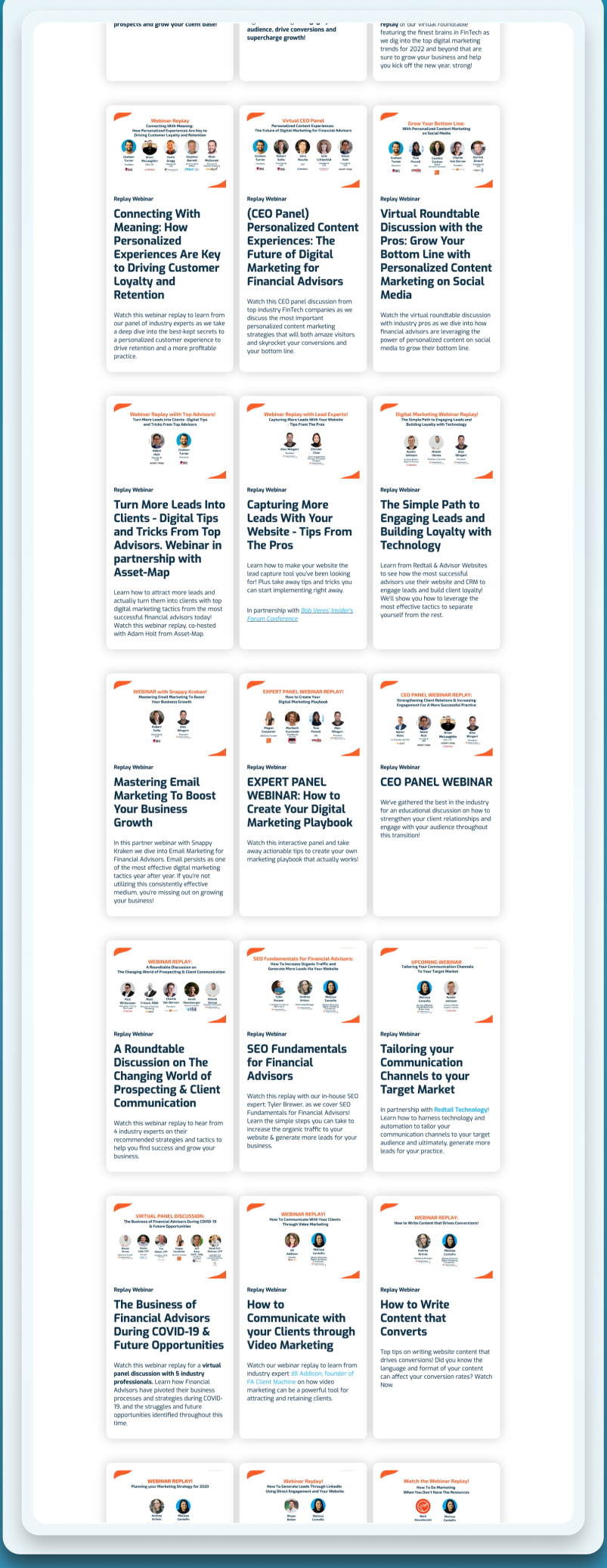
Advisor Websites webinar library
+28% MQL conversionThe webinar replay library, rebuilt on HubSpot with an opt-in template system.
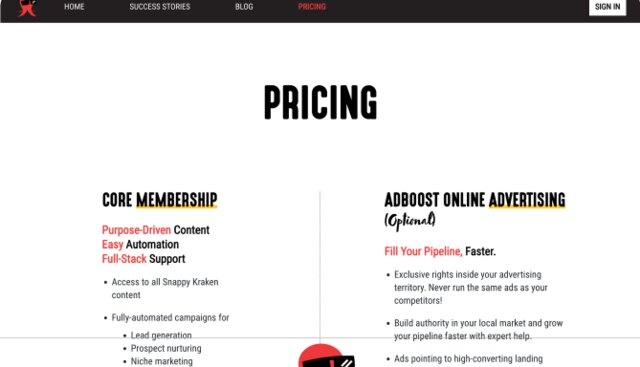
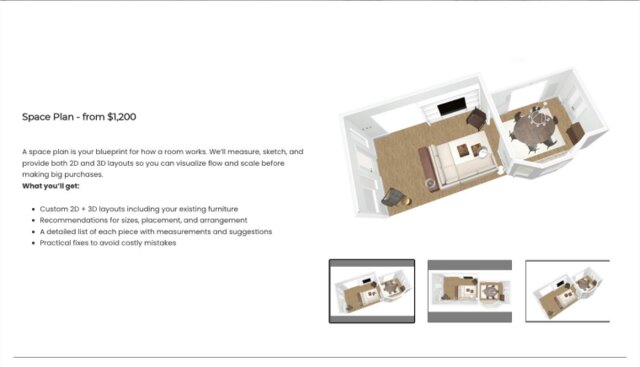
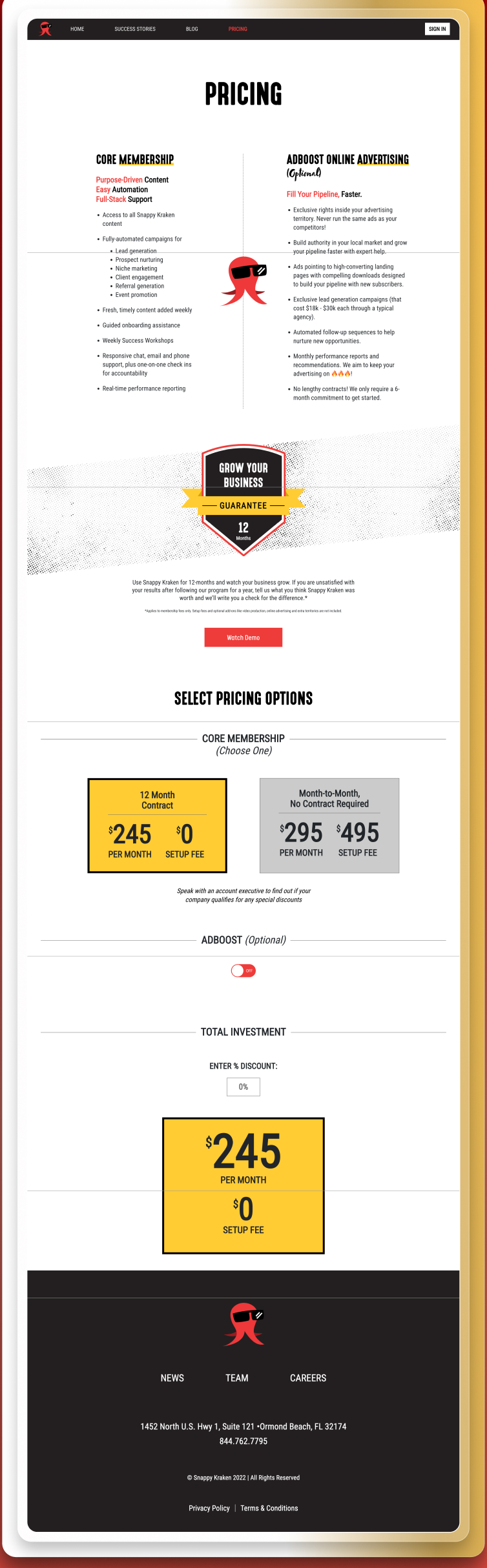
Snappy Kraken pricing page
Pricing pageThe Snappy Kraken pricing page, redesigned on HubSpot CMS.
What is a HubSpot website redesign?
A HubSpot website redesign rebuilds your marketing site on HubSpot CMS with templates, modules and CRM wiring included, so forms, lists and attribution work at launch. Jackai Agency ships it as a fixed 14 to 21 day project, priced from CA$9,700.
The design is the visible half. The other half is the portal: which forms create which contacts, which lifecycle stage a demo request lands in, and which source every lead carries into the CRM. A redesign that ignores that half gives you a nicer site that sales still cannot trust.
Who is this for?
Marketing teams living in HubSpot
Your CRM is HubSpot but the site fights it. The rebuild makes the site a native part of the funnel.
SaaS and martech
A six-page responsive build for Snappy Kraken shipped in three weeks. That cadence, on your roadmap.
Teams leaving agency retainers
Modules your team can compose without a developer, documented at handover.
How does the build run?
- Step 1
Portal and funnel audit
What the CRM already knows, what the site fails to capture, what gets wired.
- Step 2
Design on the system
Templates and modules composed from tested blocks, on your brand.
- Step 3
CMS build and wiring
HubSpot CMS build. Forms, lists, workflows and attribution connected and tested.
- Step 4
Launch and verify
QA across devices, tracking verified, documented handover to your team.
The HubSpot website redesign kit: my checklist before a single page changes
HubSpot has sponsored redesign guides and checklists, but I have not found one official kit, so here is the one I use. It is ten checks, run in this order, and the first five happen before anyone opens a design file.
- Export the numbers. Leads by original source, form submissions by page and the sales-accepted rate for the last 90 days. This is the baseline the new site has to beat.
- List every live URL. Pull pages, blog posts, landing pages and files from HubSpot, then add the URLs Search Console says get clicks.
- Audit the forms. Which forms exist, which pages use them, which lists and workflows they feed, and which ones nobody has touched in a year.
- Map lifecycle stages. Write down what makes a contact a lead, an MQL and an SQL today, and who changes the stage. The new forms must respect it.
- Check the theme. Old drag-and-drop templates, a legacy theme or a child theme decide how much is rebuilt versus restyled.
- Write the page list. One row per buyer question and one page per row, with the proof each page needs beside it.
- Design the modules. A small set of modules your team can rearrange without a developer, documented with what each one is for.
- Plan the redirects. Every old URL that changes gets a 301 to the closest new page, added in HubSpot before launch.
- Test with real buyers. Four to six people from the target account list try the key tasks on the staged pages.
- Compare at day 30, 60 and 90. Same three numbers as step 1, same date range length, written down.
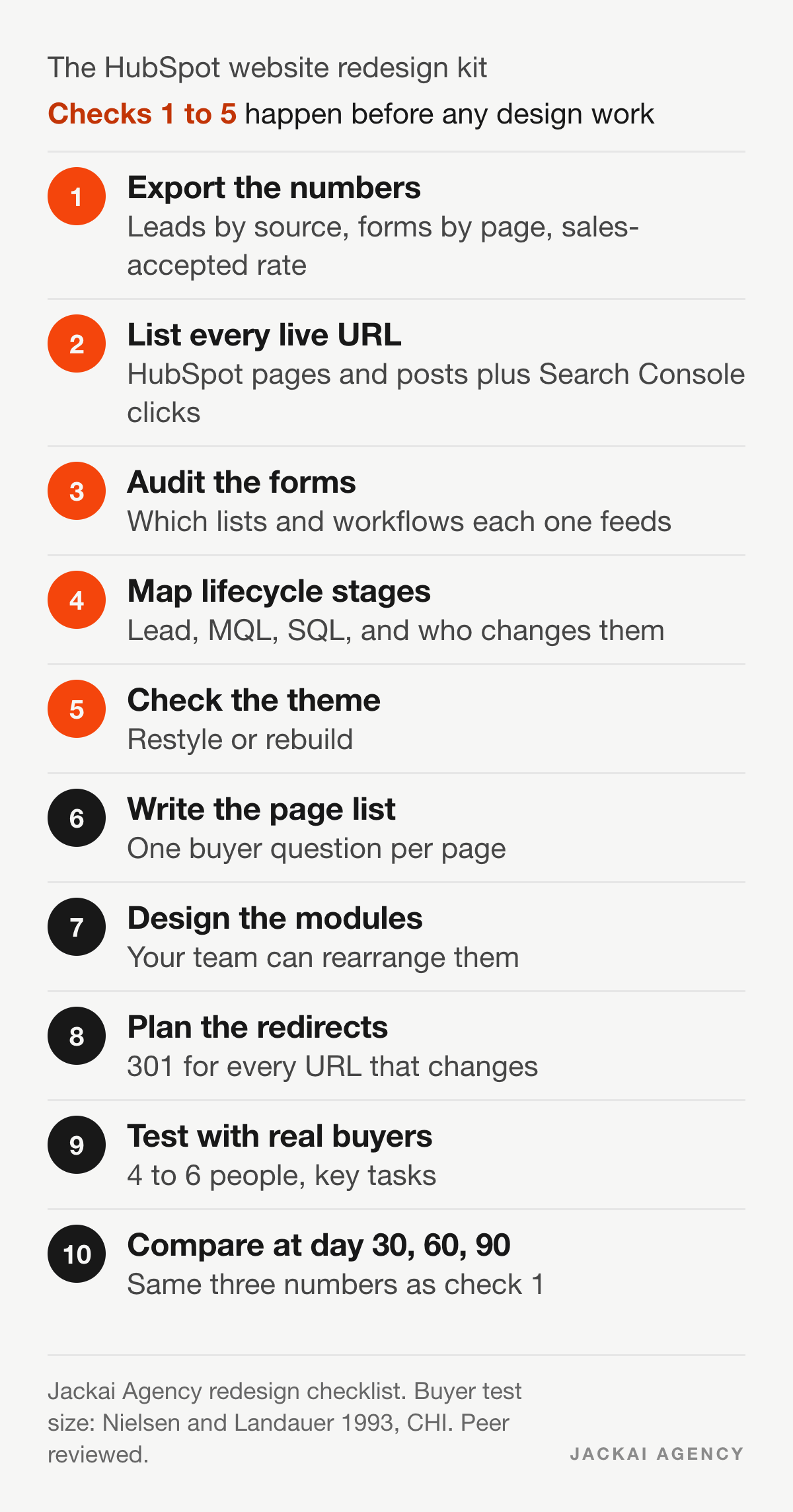
Step 9 is where most teams cut corners. Nielsen and Landauer modeled 11 usability studies and found that problem discovery follows a predictable curve, with the best return per test at about four evaluations on a medium project (Nielsen and Landauer, CHI, 1993). I apply that curve to buyer calls on staged pages, which is my adaptation, not their finding. Four calls fit in a week, before launch, when changes are cheap.
How much does a HubSpot website redesign cost in Canada?
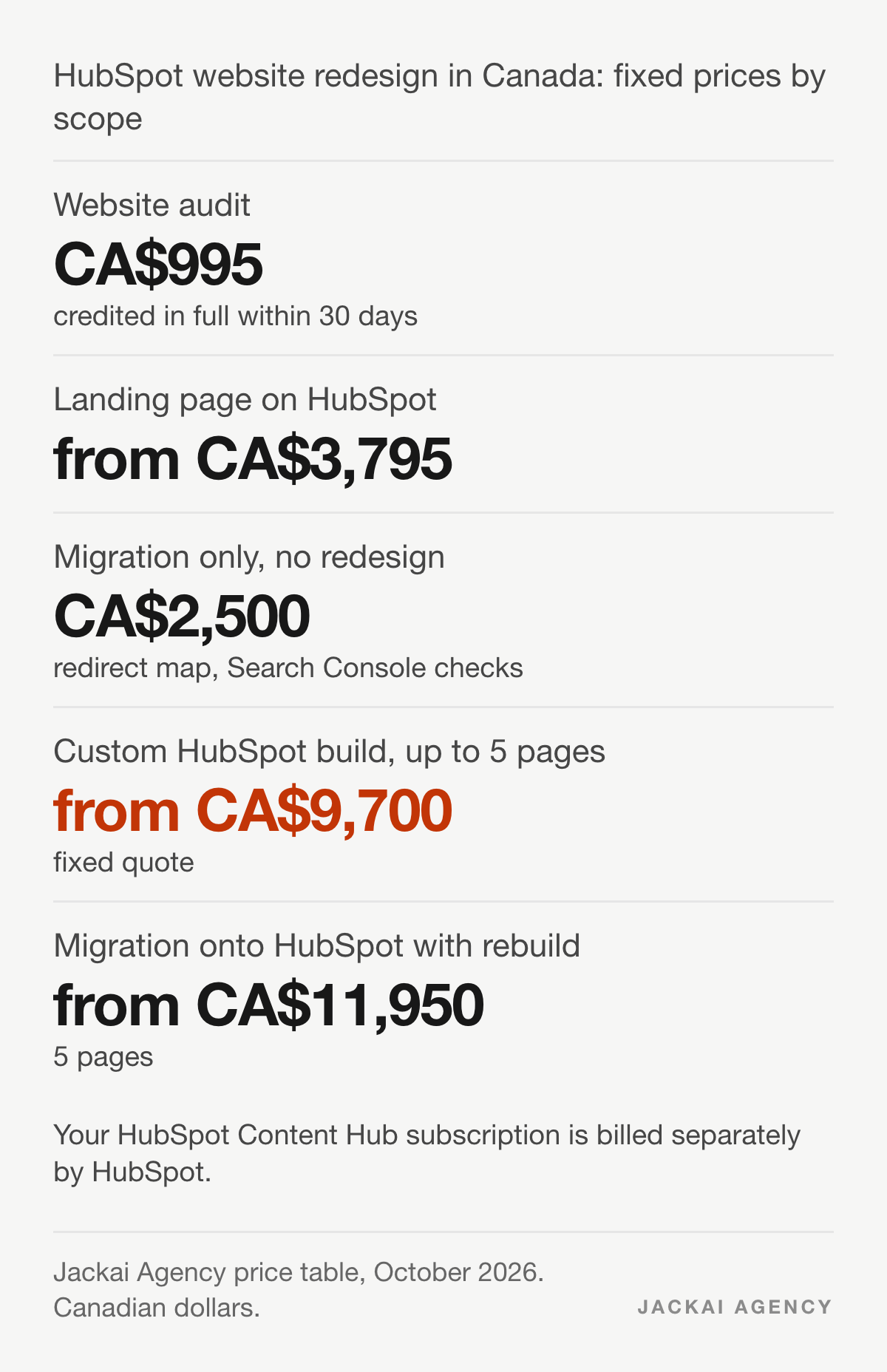
My HubSpot website redesign starts at CA$9,700 for a custom build of up to five pages, on a fixed quote. A migration onto HubSpot with a rebuild starts at CA$11,950. Your HubSpot subscription is a separate bill, paid to HubSpot.
Those are the two numbers people ask about first. The full ladder looks like this:
- Website audit: CA$995, credited in full if a project starts within 30 days.
- Landing page on HubSpot: from CA$3,795.
- Migration only, no redesign: CA$2,500 for redirect mapping and Search Console checks before and after.
- Custom HubSpot build, up to five pages: from CA$9,700.
- Migration onto HubSpot with a rebuild, five pages: from CA$11,950.
What does HubSpot itself charge?
Content Hub Starter lists at CA$26 a seat a month. Professional starts at CA$585 a month with 3 core seats, and Enterprise at CA$1,950 a month with 5 (HubSpot Content Hub pricing, read 11 October 2026). On 11 October 2026 HubSpot also showed an introductory offer on Starter. Prices change often, so check the page the week you buy.
Why does a HubSpot build cost more than a WordPress build?
In my price table the same five-page custom site is CA$8,950 on WordPress and CA$9,700 on HubSpot. The gap is the wiring: HubSpot themes are written in HubL, every form is a HubSpot form tied to lists and workflows, and I test each one end to end before launch. On WordPress some of that work belongs to a plugin.
Is HubSpot a CMS or a CRM?
HubSpot is both: a CRM and a website CMS called Content Hub, formerly CMS Hub. The CRM is the contact database every hub shares, and Content Hub is the website builder that sits on top of it. That shared database is the whole reason to redesign on HubSpot rather than beside it.
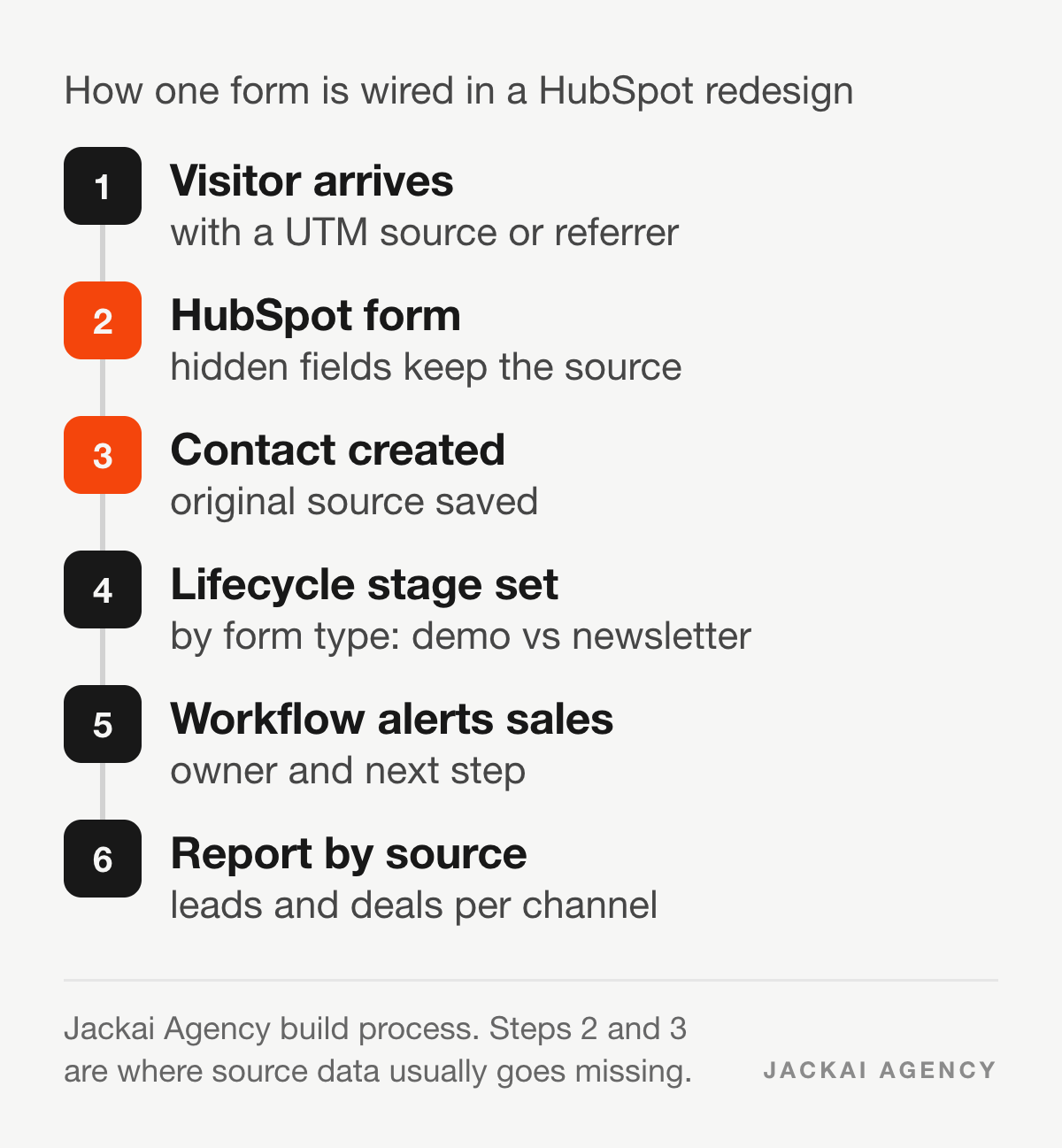
When the site and the CRM live in one system, a form fill becomes a contact with its page history attached, without a connector in the middle. When they live apart, a plugin or a Zapier step passes the data across, and that step is where source data usually goes missing.
This matters past the marketing team. Homburg, Jensen and Krohmer found that companies where marketing and sales share information and work closely reach better market performance than those where the two run as separate camps (Homburg, Jensen and Krohmer, Journal of Marketing, 2008). A website that writes clean data into the CRM both teams read is one practical way to close that gap.
What does "wired into your CRM" actually mean?
It means every form, chat and booking on the new site creates or updates the right contact, sets the right lifecycle stage, and keeps the source of the visit. I check all three on a test contact before launch, not after.
Forms and lifecycle stages
A demo request and a newsletter sign-up are different intents, so they should not land in the same stage. I map each form to a stage and a list, and I keep field names identical to the ones your workflows already read, so nothing downstream breaks.
Lead source on every contact
HubSpot records an original source on each contact. The redesign keeps UTM parameters through every form, adds hidden fields where a booking tool or an embedded calendar would drop them, and checks that offline and AI referral traffic does not all collapse into "Direct traffic".
More than one buyer per deal
B2B purchases are made by groups of people across departments and levels, not by one buyer (Johnston and Bonoma, Journal of Marketing, 1981). So the site needs pages for the person who signs and the people who check, and each form should tell sales which of them filled it in. Buyers also meet a firm through many touchpoints over time (Lemon and Verhoef, Journal of Marketing, 2016), which is why I never assume the homepage is page one.
How do you redesign a HubSpot site without losing SEO?
Keep every URL that earns clicks, 301-redirect every URL that has to change, and compare Search Console before and after. In the redesigns I have handled, the biggest ranking losses came from deleted or renamed pages with no redirect.
- Export the pages with clicks and impressions from Search Console for the last 12 months.
- Keep those URLs where you can. Where you cannot, map each one to the closest new page.
- Add the redirects in HubSpot's URL redirects tool before launch, then test a sample of them.
- Carry over titles, meta descriptions and the copy that ranks, then improve it, rather than starting blank.
- Resubmit the sitemap on launch day and check coverage weekly for a month.
Speed belongs in this list too. People tolerate about two seconds of waiting for a simple web task (Nah, Behaviour and Information Technology, 2004), and slower pages lowered task performance, attitudes and intent to return in a controlled experiment (Galletta et al., Journal of the Association for Information Systems, 2004). Heavy sliders and old embedded scripts are the first things I remove.
Should you stay on HubSpot or leave it?
Stay if your sales team works in HubSpot every day and your forms already feed it. Leave the website, but keep the CRM, if you only use HubSpot for the site and the bill has outgrown what you get from it.
The reasons I hear from teams considering a move are the price jump from Starter to Professional, paid seats, and onboarding fees on the higher tiers. Those are real costs. So is leaving. Economists describe how the cost of leaving a system grows as you build more on it (Farrell and Klemperer, Handbook of Industrial Organization, 2007), and a HubSpot portal with years of workflows, lists and reports is a lot to rebuild.
Why is HubSpot so expensive?
Because you are paying for the shared database, not only the website builder. Content Hub Professional costs more than a WordPress host because the pages, forms, smart content and reports all read the same contact record. If nobody uses those parts, it is expensive. If sales works in them every day, the shared record can replace a connector or two. Price your own stack before assuming it does.
Who is HubSpot's biggest competitor for the website?
For the website itself, WordPress, Webflow and Framer are the usual alternatives. I build on all three. If you are leaving HubSpot's CMS but keeping the CRM, I connect the new site's forms to HubSpot so the contact data stays in one place.
What is the 3 second rule in website design?
The 3 second rule is popular shorthand for how fast a visitor decides whether a page is for them. It is not a measured limit. In one study, people judged a home page's visual appeal in 50 milliseconds.
Lindgaard and colleagues found that ratings of visual appeal made after 50 milliseconds closely matched the ratings people gave after 500 milliseconds (Lindgaard et al., Behaviour and Information Technology, 2006). On a HubSpot redesign that shapes the first screen: one plain sentence about who you help, one proof point, and one action. Everything else can wait for the scroll.
How often should you redesign a HubSpot website?
Most B2B sites get a full redesign every three to five years, in my experience, with smaller changes every quarter. Change the cadence when the numbers say so, not the calendar.
The signal I watch is the cost of change. When adding a page takes a developer and a week, the theme has drifted. General software research points the same way, though it studies business software, not websites: complexity raises the cost of every later change (Banker et al., Communications of the ACM, 1993). A module library your team can use is the fix that lasts.
Can AI redesign my HubSpot website?
AI can draft copy, suggest layouts and speed up a content audit, and HubSpot ships its own AI tools inside Content Hub. It cannot decide what your buyers need to see first, check that a form sets the right lifecycle stage, or own a redirect map. I use it for drafts and checks, and I sign off every page myself.
Hiring a HubSpot website designer in Vancouver or anywhere in Canada
Look for three things: HubSpot builds you can click through, a fixed quote in Canadian dollars, and a plan for your forms and lead source, not only the design.
- Live HubSpot work. Ask for URLs, not screenshots. The before and after builds above for Snappy Kraken and Advisor Websites are live HubSpot sites.
- Consent on every form. Commercial email to Canadians needs consent under Canada's Anti-Spam Legislation, Justice Laws, so the redesign adds a clear opt-in checkbox and keeps the consent record on the contact. This is not legal advice, so confirm your consent wording with counsel.
- A fixed price and a named person. You work with me from the first call to launch, on a quote that does not move unless the scope does.
I am based in Vancouver and work with B2B teams across Canada and the US on video calls, so the time zone is the only part of the project that is local. Advisor Websites, one of the case studies above, is a Vancouver SaaS company.
Jackai Agency is the Vancouver web design studio of Joshua Jackai. I design and build HubSpot, WordPress and Framer websites for B2B companies, with fixed quotes in Canadian dollars.
Build your quote in sixty seconds
Pick the service, answer three questions, get a fixed price. A five-page custom HubSpot CMS build starts at CA$9,700.
Questions, answered
How much does a HubSpot website redesign cost?
A custom HubSpot CMS build of up to five pages starts at CA$9,700, and a migration onto HubSpot with a rebuild starts at CA$11,950. Templates, modules and CRM wiring move the number, and the calculator above prices it in about a minute.
How long does a HubSpot CMS build take?
The published window is 14 to 21 days from onboarding. Snappy Kraken's six-page responsive build shipped in three weeks.
Can you migrate us from WordPress to HubSpot?
Yes. Content, URLs and rankings are mapped and preserved, and the CRM integration is wired so forms, lists and attribution work from day one.
Do we keep our existing HubSpot portal?
Yes. The build works inside your portal, your CRM data and your existing automation. Nothing is rebuilt that already works.
Do you work with HubSpot's existing theme or build a new one?
It depends on the theme. A modern theme with clean modules is usually restyled and extended. Legacy drag-and-drop templates are rebuilt as a new theme, because patching them costs more over time.
Can you redesign the site but keep it off HubSpot CMS?
Yes. If you keep the HubSpot CRM but want the website on WordPress or Framer, I connect the new site's forms to HubSpot so contacts, sources and lifecycle stages still land in one place.
The research behind these answers
Written by Joshua Jackai, Jackai Agency, Vancouver. Updated .
Peer-reviewed research
- Nielsen, J. and Landauer, T. K. (1993). A mathematical model of the finding of usability problems. Proceedings of CHI '93, 206 to 213. doi.org/10.1145/169059.169166
- Homburg, C., Jensen, O. and Krohmer, H. (2008). Configurations of marketing and sales: a taxonomy. Journal of Marketing, 72(2), 133 to 154. doi.org/10.1509/jmkg.72.2.133
- Johnston, W. J. and Bonoma, T. V. (1981). The buying center: structure and interaction patterns. Journal of Marketing, 45(3), 143 to 156. doi.org/10.1177/002224298104500312
- Lemon, K. N. and Verhoef, P. C. (2016). Understanding customer experience throughout the customer journey. Journal of Marketing, 80(6), 69 to 96. doi.org/10.1509/jm.15.0420
- Nah, F. F.-H. (2004). A study on tolerable waiting time: how long are web users willing to wait? Behaviour and Information Technology, 23(3), 153 to 163. doi.org/10.1080/01449290410001669914
- Galletta, D. F., Henry, R., McCoy, S. and Polak, P. (2004). Web site delays: how tolerant are users? Journal of the Association for Information Systems, 5(1), 1 to 28. doi.org/10.17705/1jais.00044
- Farrell, J. and Klemperer, P. (2007). Coordination and lock-in: competition with switching costs and network effects. Handbook of Industrial Organization, Vol. 3, 1967 to 2072. doi.org/10.1016/S1573-448X(06)03031-7
- Lindgaard, G., Fernandes, G., Dudek, C. and Brown, J. (2006). Attention web designers: you have 50 milliseconds to make a good first impression! Behaviour and Information Technology, 25(2), 115 to 126. doi.org/10.1080/01449290500330448
- Banker, R. D., Datar, S. M., Kemerer, C. F. and Zweig, D. (1993). Software complexity and maintenance costs. Communications of the ACM, 36(11), 81 to 94. doi.org/10.1145/163359.163375
Industry, vendor and first-party sources (not peer reviewed)
- HubSpot Content Hub pricing, read 11 October 2026 (vendor pricing, Canadian dollars).
- Canada's Anti-Spam Legislation, Justice Laws (legislation).
- Jackai Agency price table, October 2026 (first-party, Canadian dollars).

One senior designer, first call to launch
I am Joshua Jackai, an American designer based in Vancouver. You work with me directly on strategy, design and build. No account team, no hand-offs, and the record above is mine.
Get an EstimatePick a time. We measure your starting numbers on the call.
Mobile conversion rate, AI-referred traffic and lead count, measured before any work starts. You leave with the window and the number, whether or not you hire me.
If the calendar does not load here, the host is blocking the frame. Open it in a new tab with the link above.
