Influencer Campaign For Navas
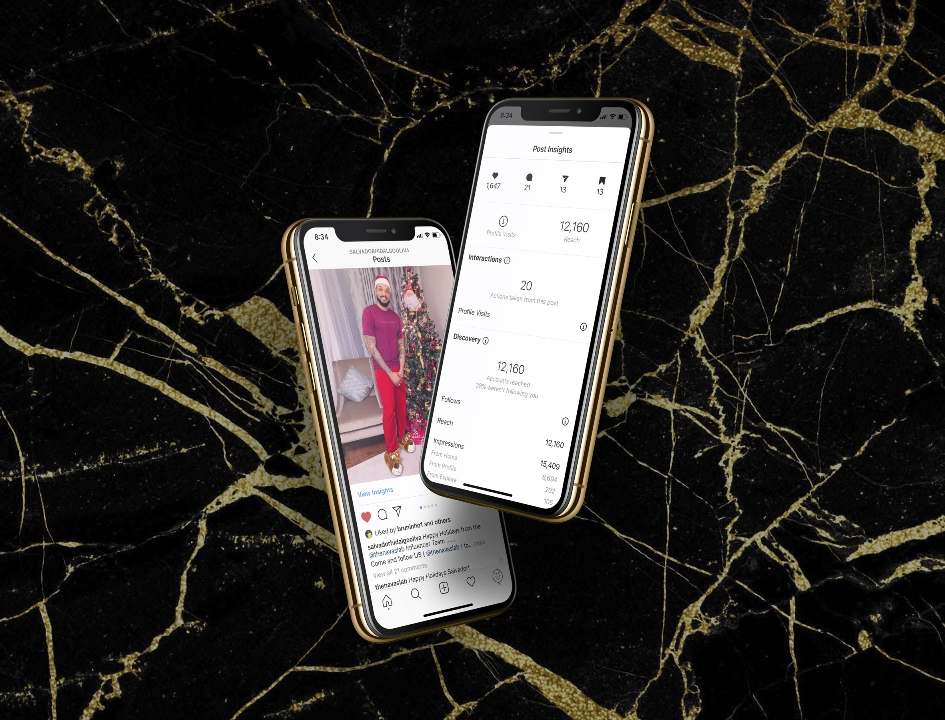
We ran an influencer campaign for Navas Lab Apparel, a DTC apparel brand, and the work that decided it happened well before anybody posted anything. Creator campaigns get talked about as if the creative is the hard part. It rarely is. The hard part is a long list of unglamorous operational decisions, and each one of them can quietly cost you the campaign.
This is a look at those decisions as they apply to an influencer campaign for Navas Lab Apparel. Not the deck, the machinery underneath it. Sourcing, vetting, seeding, briefing, deliverables, rights, disclosure, and what happens to the content after the window closes. Brands tend to spend nearly all of their attention on the sliver of it that shows up in the feed.
Sourcing and Vetting for an Influencer Campaign for Navas
Sourcing is the highest leverage hour in the whole process and it is routinely handed to whoever has the least experience. Pick the wrong people and no brief, no budget, and no amount of creative direction will save the outcome. Pick the right ones and mediocre execution still lands. Casting is most of an influencer campaign for Navas, and most of every other one ever run.
Our sourcing pass on an influencer campaign for Navas Lab Apparel starts from the audience and works backwards, never from a list of creators. Who is supposed to see this? Where do those people already spend attention? Which accounts do they trust enough to be sold to by? Only then do names enter the conversation, and by that point most of the obvious names have already disqualified themselves.
Follower count is the least useful number on the page
Follower count measures how many people once tapped a button. It says nothing about whether those people are still listening, whether they overlap with your customer, or whether they buy anything. A vetting process for an influencer campaign for Navas has to treat that number as context, roughly the way you would treat a company’s headcount when deciding if it is any good at its job.
Audience fit is the number that actually predicts what an influencer campaign for Navas will do. A creator with a small, dense, specific audience who trusts them will outperform a large general account almost every time on apparel, because clothing is bought on identification. People buy what somebody they want to resemble is wearing. Scale without identification is a billboard, and billboards are cheaper.
Engagement rate gets treated as the sophisticated alternative, and it is barely better. It is trivially inflated, easily bought, and heavily distorted by format. A creator who posts bait gets engagement. A creator whose audience actually respects them may look worse on the dashboard while driving more of the behavior an influencer campaign for Navas would exist to produce.
Read the comments before you read the metrics
Here is the single cheapest piece of due diligence available, and almost nobody does it. Open the creator’s last twenty posts and read the comments. Not the count. The actual words. Fifteen minutes of reading tells you more about whether a partnership will work than any analytics export ever will.
Comments reveal the relationship. Are people asking questions, or dropping emoji and moving on? Do they mention things the creator said three weeks ago? Do they ask where something is from? That last one is the tell that matters most for any influencer campaign for Navas or any other apparel brand. An audience that already asks a creator where they got their clothes is an audience with buying intent aimed at exactly the thing you sell.
The comments also expose the fake ones. Bought engagement reads as generic praise with no referent, the same eight phrases rotating. Real audiences argue, joke, correct the creator, and reference the past. Nothing on a media kit surfaces that, which is precisely why we read before we ask for numbers.
The last vetting layer is history. What has the creator posted paid before, how often, and for whom? Somebody running a steady stream of sponsorships has trained their audience to scroll past ads. Their fee has not caught up with that fact yet, which is a specific way to lose money on an influencer campaign for Navas without ever seeing the cause in a report.
Roster shape is a decision, not an outcome
How many creators, and at what size, usually gets settled by whatever the budget happens to divide into. It deserves better than arithmetic. A roster of a few substantial partners and a roster of many small ones can cost the same and do entirely different jobs, and only one of those jobs is the one you are trying to do.
Concentration buys depth. A few creators posting repeatedly build the impression of genuine adoption, and each one can be briefed properly, seeded properly, and managed as an actual relationship. That is the shape an influencer campaign for Navas benefits from when the goal is credibility inside a specific audience rather than raw coverage across a wide one.
Distribution buys surface. A wide roster of small accounts reaches corners no single creator touches, and the volume hands you enough content to actually test with. The tradeoff is that nobody gets managed well at that count and quality variance goes through the roof. Deciding which of those failures you can live with is the real decision.
Mixing tiers is the usual answer and it is usually right, as long as each tier has a written job. Anchors for credibility, volume for surface, and a small allocation for people who are about to be considerably bigger than they are today. An influencer campaign for Navas without that written down drifts toward whoever answers email fastest, which is not a strategy.
Product Seeding and Sizing Logistics on an Influencer Campaign for Navas
Seeding is where apparel campaigns diverge from every other category, and where they most often fall over for reasons nobody thought to plan for. Software creators need a login. Apparel creators need a physical object, in the right size, at the right address, in time, and it has to fit and look correct on their specific body.
That chain has more failure points than most brands account for. Wrong size means the creator posts in something that fits badly, which is worse than not posting at all, because now your product looks bad to a warm audience. Late delivery collapses the calendar. A missed customs form can eat a week. None of this is glamorous and all of it decides whether an influencer campaign for Navas produces anything usable.
Sizing is a logistics problem that turns into a content problem
Asking a creator for their size sounds simple and is not. It is the quiet step where an influencer campaign for Navas can lose a week without anybody noticing until it is too late to fix. People self report optimistically. Sizing varies between brands and between garments inside the same brand. A creator who normally wears one size in one cut may need something different in another, and they have no way to know that in advance.
So we do not just ask for a size. We ask what they usually wear, in which brands, and how they like it to sit. Then we make the call ourselves and, where the budget allows, we send options. Sending a second size costs a fraction of what a bad shot costs. Every influencer campaign for Navas style seeding plan should treat that spend as insurance rather than waste.
Timing gets planned backwards from the post date with real slack in it, not the shipping estimate the carrier prints. Creators need the product in hand long enough to actually wear it. Somebody photographing a garment they unboxed that morning produces content that looks exactly like that, and audiences read the difference even if they cannot name it.
Seeding also deserves a decision about whether it comes with obligation. Gifted product with no contract is cheap and produces nothing reliable. Paid seeding with a deliverable attached is a different instrument entirely. Confusing the two is how brands end up believing they ran an influencer campaign for Navas when what they actually ran was a giveaway with extra steps.
Writing the Brief for an Influencer Campaign for Navas
A brief has one job, which is to make the creator’s best instinct and the brand’s actual need point in the same direction. Most briefs fail by trying to do a second job, which is directing the content. The moment a brief starts writing captions, it has stopped being a brief and started being a storyboard with a worse hit rate.
The structure we use on an influencer campaign for Navas Lab Apparel is short and blunt. What this is for. Who it is talking to. What has to be true in the content. What must never appear. What we need back and when. Everything else is the creator’s call, because the creator’s judgment is the thing being paid for.
Direction without killing the voice
The reason a creator works at all is that their audience believes they mean it. Every instruction that pulls them away from how they normally sound spends a little of that belief. Spend enough and you have bought a very expensive ad on a small channel, which is the worst trade in the medium.
So the brief on an influencer campaign for Navas gets specific about outcomes and stays quiet about method. The garment has to be visible and read correctly. The audience has to understand what it is and where it comes from. How the creator gets there, what they say, how they frame it, what joke they make on the way, that is theirs. It is the reason they were selected.
Exclusions are the exception to the light touch rule. Those need to be explicit and absolute. What the brand will not be adjacent to, claims that cannot be made, language that is off limits. A short list of hard nos does more useful work than three pages of creative suggestion, and it saves the approvals round from becoming a negotiation. Our whole approach to influencer marketing is built on that asymmetry.
One more thing belongs in the brief and is almost always missing. Tell the creator why they specifically were chosen. It reads as flattery and functions as direction. A creator who knows which part of their work you actually wanted will lean into it, which is a free quality increase on any influencer campaign for Navas or anything like it.
Deliverable Structure and Timing
Deliverables get negotiated as a shopping list, which is how brands end up paying for volume that does nothing. Three posts and five stories sounds like more than one post and one story. Whether it is depends entirely on structure, sequence, and what each piece is supposed to accomplish. A deliverable list on an influencer campaign for Navas should be assembled out of jobs, never out of quantities.
The structure question on an influencer campaign for Navas is what each unit does. A feed post is a durable artifact that lives on the profile and can be found later. A story is a spike that dies in a day and drives immediate action. Video carries demonstration. They are different tools and buying them by the pound treats them as identical.
Sequence matters as much as count. One creator posting once looks like an ad. The same creator posting across a couple of weeks looks like ownership, because that is how a person who actually wears something behaves. That distinction costs nothing to design and cannot be bought back later.
Timing across the roster is a separate decision again. Stacking everybody on one day produces a visible wave and reads as coordinated, which is to say as paid. Spreading the roster gives an audience the sensation of noticing something organically, more than once, from different directions. Any influencer campaign for Navas planning its calendar is really choosing between an event and a drumbeat.
Approval windows go in the agreement with actual numbers attached. Creators plan their content weeks out and a brand sitting on an approval for six days is not a minor inconvenience, it is a broken commitment that ruins the creator’s schedule. The brands creators want to work with twice are the ones that answer inside a day.
Usage Rights and Whitelisting Get Negotiated Before the Shoot, Not After
This is the most common expensive mistake in the category. A campaign performs, a brand wants to run the best asset as an ad, and only then discovers it bought a post and not the right to use it. Now you are renegotiating from zero leverage against your own success.
Rights on an influencer campaign for Navas belong in the first conversation about money, because they are part of the price. A post is one thing. A licence to use the footage in paid media for a defined term across defined placements is a different thing with a different value. Both parties should price it consciously rather than discover it later.
The terms that need naming are duration, territory, placements, and whether the brand can edit. Perpetual worldwide rights are not free and creators are right to charge for them. A six month licence for paid social in one market is a reasonable ask at a reasonable price. Vagueness here always resolves in favour of the argument, never in favour of the work.
Whitelisting is a separate permission again, and brands conflate it with usage rights constantly. Running an ad from the creator’s own handle means their audience credibility is being borrowed for spend they do not control. Any influencer campaign for Navas asking for that needs to ask explicitly, price it separately, and cap it. The platform’s own material on Instagram for business covers the mechanics of partnership ads. The negotiation is the part that matters.
Disclosure is not optional and should not be reluctant
Paid partnership disclosure is a legal obligation in most markets a DTC brand sells into, and the rules are not subtle. Material connection gets disclosed, clearly, where a person will actually see it. Buried hashtags at the end of a caption do not satisfy that in spirit and increasingly do not satisfy it in enforcement either.
Brands hedge on disclosure because they think it dampens performance. The evidence for that fear is thin and the downside is real. An influencer campaign for Navas that is compliant from the first post costs nothing extra. One that gets flagged costs the content, the relationship, and a conversation nobody wants to have.
Practically, that means the brief carries the disclosure requirement, the platform tools get used properly, and the brand never asks a creator to soften it. Putting compliance in the brief costs one line. Putting it in the approvals round makes it somebody’s opinion, and opinions lose to deadlines.
What Happens to the Content After the Influencer Campaign for Navas Window Closes
Most brands treat a creator campaign as consumable. Posts go up, a report gets written, everyone moves on and the assets rot in a folder. That is throwing away the most durable thing the money bought, which is a library of real people using your product, shot in a register no studio day reproduces.
Repurposing is why the rights conversation happens up front rather than at the end. Once a licence exists, creator content can carry paid social, sit on product pages, populate the brand feed between drops, and answer objections in email far better than brand copy does. The influencer campaign for Navas window is when the assets are made, not when they stop being worth something.
The one discipline that matters here is attribution and consent, on an influencer campaign for Navas or on anything else. Reusing somebody’s face and name in contexts they did not agree to is both a legal problem and a fast way to lose a creator who was going to work with you again. The licence sets the boundary. Staying inside it is not a courtesy, it is the deal.
There is a compounding effect available to brands that keep relationships alive past the window. A creator on their third campaign with you needs less brief, produces better work, and reads to their audience as a genuine wearer rather than a booking. That only happens if the first influencer campaign for Navas was run in a way the creator would willingly repeat.
Why the Mechanics Deserve the Attention
Nothing in this is a creative secret. It is sourcing discipline, a sizing spreadsheet, a brief that knows what it is for, a rights clause negotiated at the right moment, and a habit of reading comments. Individually each one is mundane. Collectively they are the difference between a campaign and a folder of content.
The reason we go on about it is that the creative usually is not the constraint. Good creators make good work. What stops them is a garment that arrived late in the wrong size with a brief that told them what to say and a rights ask that appeared after the fact. Fix the machinery and the creative takes care of itself. That was the working assumption behind the influencer campaign for Navas Lab Apparel.
If you are building something at that scale and you want the unglamorous parts handled properly, the method is on the services page or book a call and we will go through the roster question first.
Related brand and campaign work