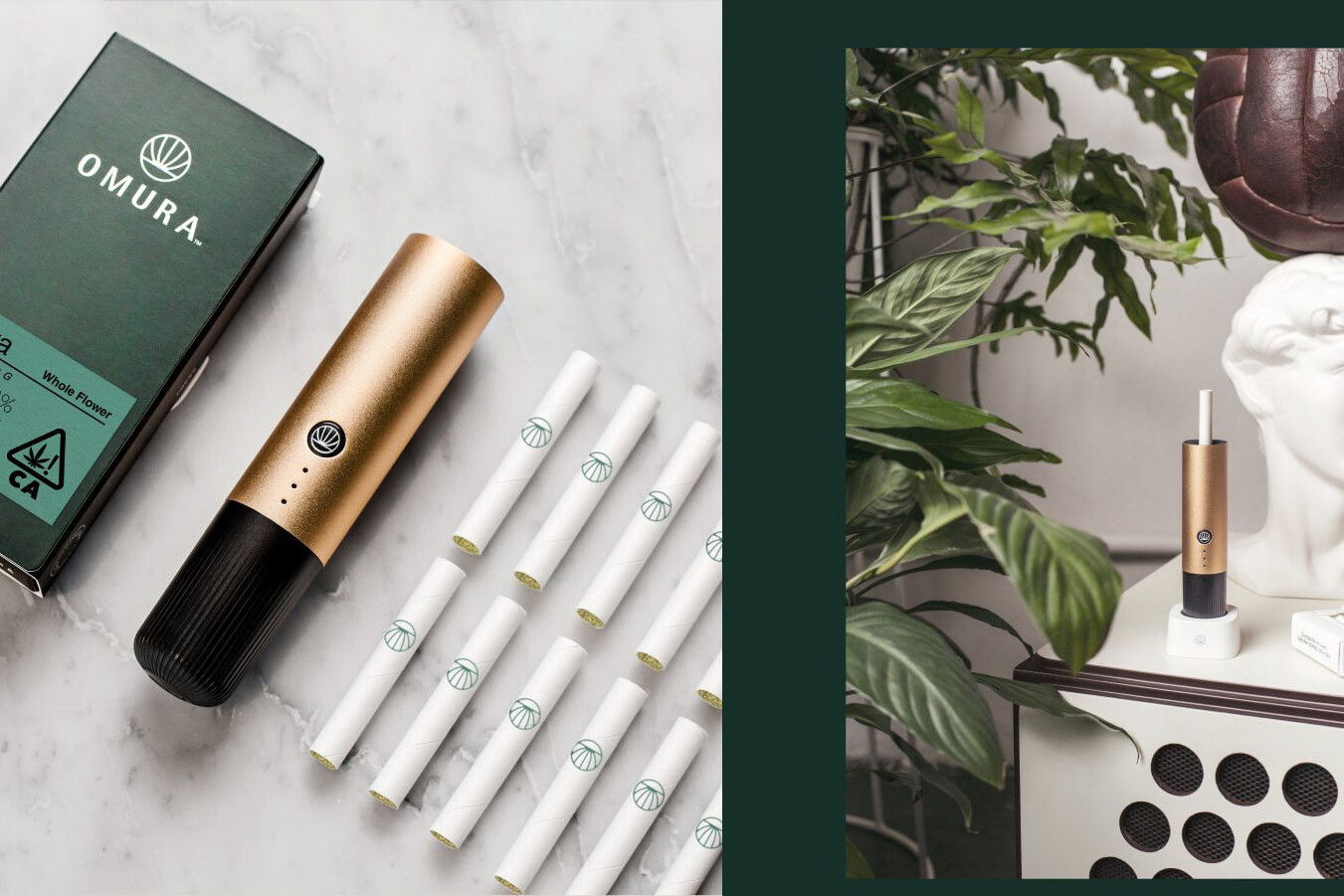
Omura Merchandising
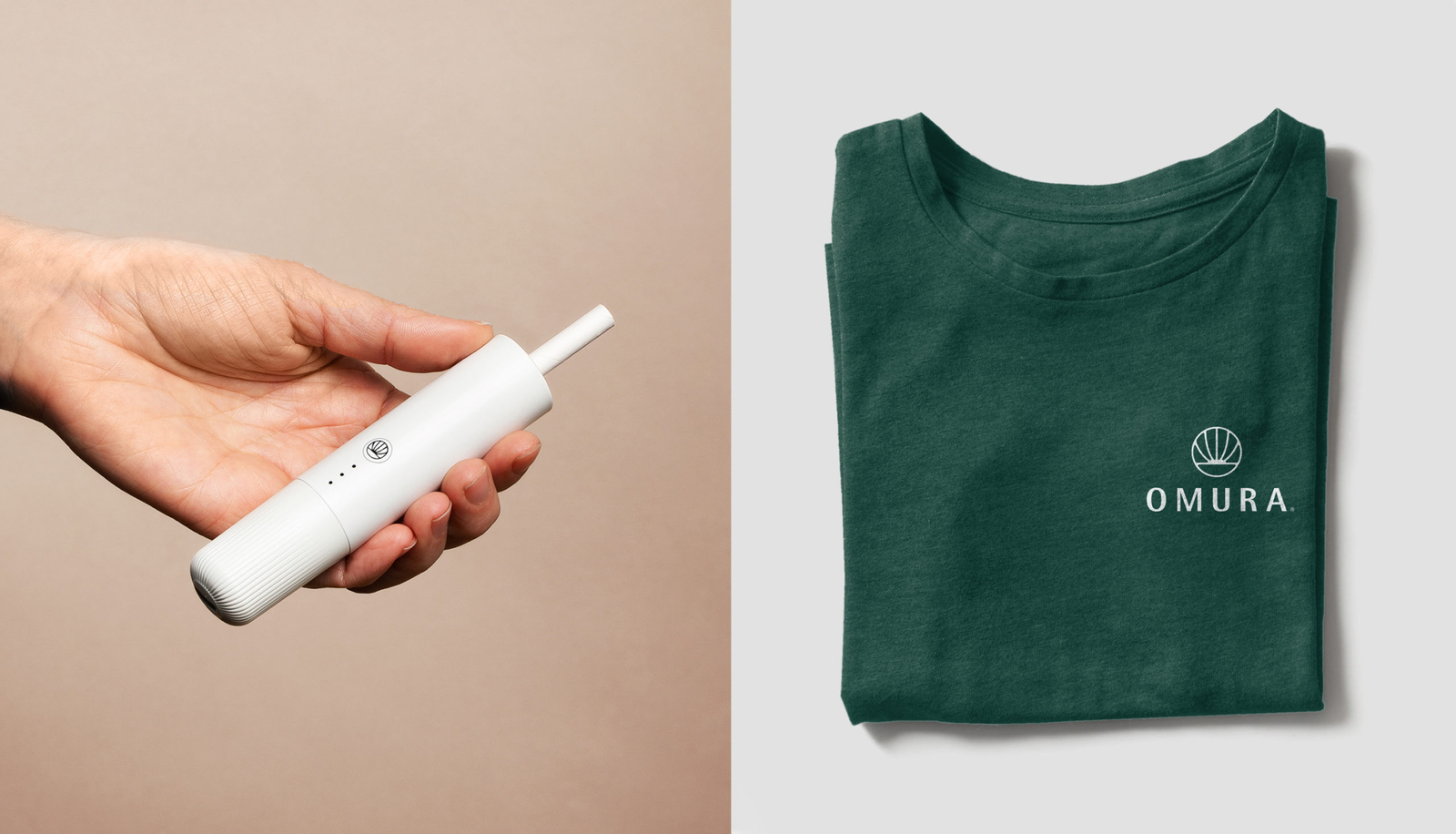
The omura merchandising work begins where the packaging work stops, at the moment a product leaves a case and has to survive a room full of competitors, a glass counter, a staff member with forty seconds, and a customer who has already decided roughly what they want. Retail is a different discipline from packaging. It has its own physics, its own legal limits, and its own failure modes. This page is about that half of the job.
Cannabis retail in Canada is unusual because almost everything a merchandiser would normally reach for is prohibited. No promotional inducements, no lifestyle imagery, no claims that could appeal to young people, and severe limits on what can be displayed where a minor might see it. Our omura merchandising approach treats those limits as the shape of the problem rather than an obstacle bolted onto it.
The three metre problem
A pack is designed in the hand and judged at a distance. Someone walking into a dispensary sees the fixture from across the room, then from a few paces, then finally up close if you have earned it. Each of those distances is a separate design brief, and most packs are only built for the last one.
Our omura merchandising thinking is organized around that approach sequence. At three metres you get shape, mass, and value contrast. At one metre you get a brand element and maybe a category cue. In the hand you get everything else. If nothing survives the first two distances, the third never happens.
What actually survives at distance
Detail dies first. Fine typography, subtle finishes, and careful hierarchy all collapse into a grey smudge from across a store. What survives is silhouette, the relationship between light and dark areas, and the rhythm created when several units sit together. Those are the assets omura merchandising has to work with at range.
Omura merchandising tests this the cheap way. Print the pack face, pin it up, walk backwards until it stops resolving, and note where that happens. It is a crude method and it is more honest than any amount of on-screen evaluation at 200 percent zoom.
Squint tests and the value structure
The regulated colour cap means most cannabis packs land in a narrow tonal band, which is exactly why value structure matters so much here. A pack that is uniformly mid-tone disappears into a fixture of other mid-tone packs. One that has a decisive light or dark mass reads as a shape before it reads as a brand.
Good omura merchandising uses that mass deliberately. The single permitted colour and the mandatory warning area together produce a value pattern whether you plan it or not. Planning it is free. Ignoring it costs you the only differentiation available at distance.
Counter presence is its own category
Cannabis retail leans heavily on the counter. Many stores keep product behind glass or behind staff, with only a limited set of items in reach. That reverses the entire self-serve logic that most merchandising practice was built on, and it means counter real estate is scarce and fought over.
Our omura merchandising position is that counter units have to justify their footprint in inches, not in ambition. A store manager gives up selling space for anything you put there. If the unit does not make a staff member’s job easier or a customer’s decision faster, it goes in the back.
Behind glass changes everything
When product sits under a glass case, the customer cannot pick it up. The tactile qualities that packaging designers agonize over are simply unavailable at the point of decision. Weight, finish, and material do nothing until after the sale, which is a strange and important fact about this category.
So omura merchandising compensates by putting the tactile story where it can be reached. A single handling sample, a dummy unit, or a staff-facing piece that lets a budtender put the material in a customer’s hand does more than any amount of finish on a unit locked inside a case.
Working with fixtures you did not choose
Store fixtures vary wildly across independents, chains, and provincial retail. Shelf depth, lighting temperature, glass tint, and rail height are all outside your control and all change how the work lands. Designing a single unit for an imagined ideal store is a reliable way to produce something that fits nowhere.
We prefer to design omura merchandising elements that degrade gracefully. A piece that works standing, lying, on a rail, or in a case is worth more than a piece that is spectacular in one configuration and useless in the other three.
Promotion restrictions and what omura merchandising is allowed to do
The federal promotion rules are the hard boundary on all of this. Inducements are prohibited. Testimonials and endorsements are prohibited. Depictions of people, characters, or animals are prohibited. Anything evoking a way of life that includes glamour, recreation, excitement, vitality, risk, or daring is prohibited. That list eliminates most of the retail marketing playbook outright.
Anyone commissioning omura merchandising work should read the actual text rather than a summary. The governing framework is published in full under the cannabis laws and regulations maintained by Health Canada, and the promotion provisions are where most well-intentioned retail ideas die.
Informational promotion is the narrow door
There are limited permitted lanes, including informational promotion and brand-preference promotion delivered where young people cannot see or access it. That is the door omura merchandising has to walk through, and it is narrow enough that the design decisions are largely determined by the legal decisions.
Practically, this means every retail piece we propose gets a legal read before it gets a design read. It is far cheaper to kill an idea in a conversation than to kill it after a production run. We would rather bring a client three compliant concepts than one exciting one that cannot exist.
Restraint reads as credibility
There is a strange upside here. Because the category is so restricted, anything loud looks either non-compliant or desperate. A quiet, well-made, factual piece of omura merchandising stands out precisely because the room is full of brands straining against the rules.
Omura merchandising leans into that. Plain information, set well, on good material, with nothing that has to be defended. It is the retail equivalent of speaking softly in a room where everyone is shouting.
Budtenders are the actual channel
In a category where you cannot advertise, cannot use imagery, and often cannot let a customer touch the product, the person behind the counter is the medium. A budtender’s recommendation carries more weight than any surface a brand can buy, because it is the only unrestricted communication in the room.
This reframes what omura merchandising is for. The primary audience is not the shopper. It is the staff member who has thirty seconds between customers and needs one memorable, accurate, defensible thing to say about your product.
Staff-facing material has different rules of thumb
Material aimed at staff can be denser than material aimed at shoppers, because staff will actually read it. It can carry more detail, more specificity about format and cultivar and process, and more of the reasoning behind the product. It still cannot be an inducement, which is a line brands cross constantly without noticing.
Our omura merchandising staff pieces are built to be skimmed once and remembered. One idea, stated plainly, with enough substance behind it that a budtender feels informed rather than sold to. Anything that reads like a sales sheet gets filed in a drawer.
Respecting the person doing the work
Budtenders can tell when a brand is condescending to them. Material that treats them as a distribution mechanism rather than as a knowledgeable person tends to get ignored, and the brand behind it acquires a reputation quickly in a small industry.
So omura merchandising writes to staff the way you would talk to a colleague. Specific, honest about what the product is and is not, and free of the breathless language that makes an experienced person stop reading at the second line.
The shipper that has to do two jobs
Secondary and shipper cartons are the most underused surface in this category. They travel to every store, they arrive in the back room, they get opened by staff, and in many cases they can convert into a display without a store having to build anything. That is a lot of value sitting in a box most brands treat as freight.
Our omura merchandising approach designs the shipper as a display from the start. A tear strip, a printed interior, a header that stands up when the top comes off. The cost delta over a plain brown case is small. The difference in what a store can actually do with it is not.
Assembly is a design constraint
Anything that requires more than a few seconds of assembly will not get assembled. Back rooms are busy, staff are not merchandisers, and a clever unit that needs instructions will end up flattened next to the recycling. This is the most common way retail display work fails.
We test omura merchandising units by handing them to someone who has never seen them and saying nothing. If they cannot get it standing without help, the design is wrong. It does not matter how good it looks once it is up.
The back room is part of the experience
The first human contact your brand has in a store is a staff member opening a case. That moment is free and almost nobody uses it. A printed interior, a clear product identification, and packing that does not fight back all shape how staff feel about handling your product.
Since budtenders are the channel, that first impression compounds. Omura merchandising treats the unboxing as a staff-facing touchpoint with real leverage rather than as logistics that happen to have a printed side.
Planogram realities nobody tells you about
You do not control your neighbours. Your product will sit next to whatever the category manager decides, at whatever facing count your velocity earns, on a shelf whose height was set for a different SKU. Every assumption a designer makes about context is provisional.
Omura merchandising accounts for this by designing units that read alone. A pack that only works as a block of six is a pack that fails the day it gets one facing. We check the single-facing case first and treat the multi-facing block as the upside, not the plan.
The block read, when you get one
When facings do line up, adjacency becomes an asset. Repeated elements build a horizontal rhythm that reads as a brand block from a distance, which is the closest thing to a billboard this category permits. Designing the pack so that repetition creates a pattern rather than a stutter is deliberate work.
That pattern comes from the packaging system itself, from where the brand element and the mandatory areas fall on each face. The structural and compliance decisions behind it are covered in our package design work rather than here.
Shelf strips, talkers, and the things stores actually accept
Many cannabis retailers refuse third-party shelf material outright, either as policy or out of compliance caution. Provincial rules differ, store rules differ, and a program built around shelf talkers may be dead in half its footprint before it launches.
Good omura merchandising asks that question before design begins, not after. What will this specific set of retailers actually permit, accept, and put up. The answer usually narrows the program considerably, and that narrowing is useful information rather than bad news.
Consistency of the omura merchandising system across touchpoints
A retail program is a set of pieces made at different times, by different vendors, in different materials, and it has to read as one thing. That is harder than designing any single piece. Drift creeps in through substitutions, reprints, and the small compromises that happen when a deadline arrives.
We hold omura merchandising together with a documented system rather than with vigilance. Defined type scale, defined proportions, defined material palette, and explicit rules for what a new piece must do to belong. Systems survive staff turnover. Vigilance does not.
Kit thinking, not collection thinking
A collection is a set of nice pieces. A kit is a set of pieces that assumes a store will only take some of them. Since almost no retailer accepts a full program, omura merchandising is designed so any subset still coheres and still communicates the same single idea.
That means no piece can be load-bearing for the whole story. Each one carries the message on its own and gains from the others when they happen to be present. It is a more defensive way to build and it matches how retail actually behaves.
Menus, boards, and screens
In-store menus and digital screens are usually the retailer’s property, running the retailer’s template, with your brand reduced to a name in a row and possibly a thumbnail. That is a humbling and clarifying constraint on any omura merchandising program.
So omura merchandising makes sure the name and the thumbnail do real work. A product name that is legible, distinct, and not easily confused with a neighbour is worth more in that environment than any physical piece we could design for the same budget.
Education inside a category that cannot advertise
Cannabis customers ask a lot of questions and the rules limit who can answer them and how. Format, onset, potency, and process are all genuine information needs, and information is one of the few permitted lanes. That makes education the most honest lever available.
Our omura merchandising approach favours education that is genuinely useful and genuinely neutral. The moment an educational piece tilts into persuasion it stops being informational promotion and starts being a compliance problem, which is a line worth staying well back from.
The QR code question
Codes that link off-pack are attractive because they seem to escape the physical constraints. They do not. Whatever sits on the other side is still promotion under the same rules, and it still has to be gated so young people cannot access it. The code is a door, not a loophole.
We use them where there is a real reason to, such as batch information or a lab result, and we skip them where they exist only to make a pack feel connected. Omura merchandising should not spend a customer’s attention on something that does not repay it.
How we scope omura merchandising work
Omura merchandising starts with the retail reality rather than with a concept. Which retailers, which fixtures, which provinces, which store policies, and what the staff there are willing to put up. That research is unglamorous and it determines whether the rest of the money is well spent.
From there, omura merchandising becomes a short list of pieces that clear the legal read, fit the fixtures, assemble in seconds, and serve the budtender first. Short lists are a feature. Programs that try to own every surface tend to own none of them.
What we will and will not claim
We do not promise sales lift from a retail program, and we are suspicious of anyone who does. Too many variables sit between a display and a transaction, and in this category the biggest one is a person behind a counter making a judgment call.
What omura merchandising can be held to is craft, compliance, and fit. Pieces that stores accept, that staff use, that survive the rules, and that make the brand legible from across a room. Those are things we can actually control and therefore things we are willing to be judged on.
Bring us the retail problem
If you have a product that is finished and a retail environment that is fighting you, that is the situation this practice is built around. Regulated categories reward the brands that understand the room they are walking into, and punish the ones that arrive with a plan written for a different industry.
You can see how this work sits alongside our identity, packaging, and digital practice on the services page, and you can look at how we document projects in our case studies. The omura merchandising discipline is one part of a larger system, and it works best when the rest of that system is already coherent.
Bring us your retailer list, your fixture photos, and your compliance constraints, and we will tell you honestly what an omura merchandising program can and cannot do inside them. That conversation is worth more than a concept deck, and it is where every good retail program we have built actually started.
Related package design work